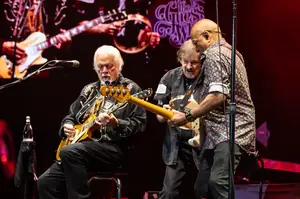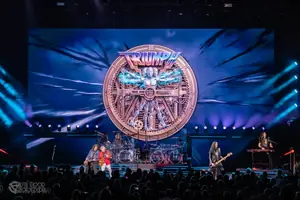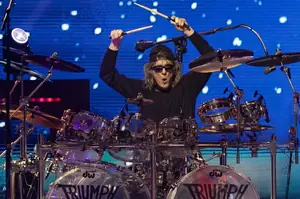
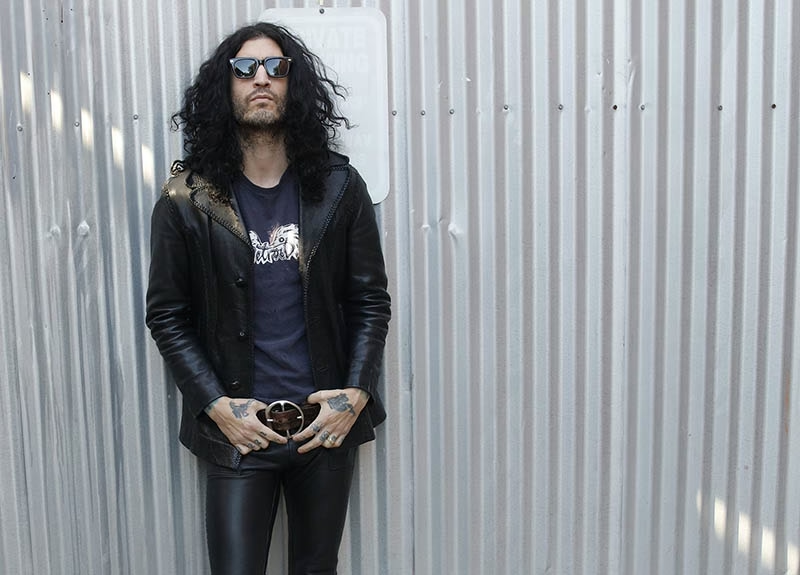
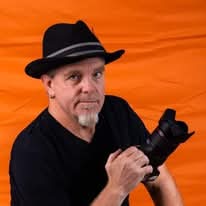
Sitting across from Tommy Clufetos, you do not see a man who merely plays the drums. You see a man who survives them. He has the lean, hungry look of a Detroit fighter who just finished 12 rounds with a heavy bag, which is essentially what he does for a living. As the rhythmic engine for Ted Nugent, Rob Zombie, Alice Cooper and Ozzy Osbourne, Clufetos has spent decades as the ultimate hired gun. But now, he is stepping into the light with *Tommy’s Rocktrip*, a project that feels less like a vanity play and more like a necessary exorcism of pure, unadulterated rock.
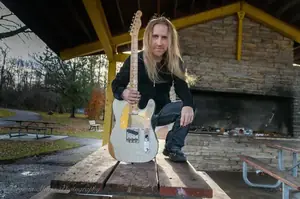
Holding the physical copy of his new record, *Beat Up by Rock n Roll*, there is a grit to the production that you just do not find in the polished, over-produced garbage clogging the airwaves today. Clufetos knows exactly what he is doing. He is not trying to reinvent the wheel; he is trying to make sure the wheel still burns rubber.
"I do. As much as it is, I don’t like the term solo album, because to me, it just sounds like a rock band. It’s four guys jamming in a room and turning up their amps and trying to create a sound together. It’s not like you know, some process put together studio solo album. So it’s just a simple rock record. That’s kind of why I called it Tommy’s Rocktrip, because it’s not me, it’s me and my bunch of guys playing some music. You know, it’s my rock trip, it’s what I like," Clufetos says, dismissing the ego-driven trappings of the "solo artist" label with a wave of his hand.
And he is right. The album breathes. It has that messy, glorious bleed of instruments that happens when you actually put musicians in a room together. This is his first proper outing as the captain of the ship, a stark contrast to the years spent in the service of rock royalty. When asked if this is indeed his first album away from the shadow of the giants, he simply confirms, "Yeah, Correct."
The assembly of the band was not a corporate affair. It was born out of the forced stillness of the global pandemic. For a man who has spent his life on a tour bus, the sudden silence of 2020 was a shock to the system, but it provided the one thing a high-demand session player never has: time.
"I put it together after I got the opportunity to make the record. The only reason I made the record was unfortunately, in this worldwide shut down, it was the first time I was ever awarded this block of time, to where I could never think about not having this tour to get ready for or I wasn’t leaving in a week. So I had this big block of time and I go, nothing’s going on, I play music so why don’t I take this opportunity to make my own music for once in my life and I did. And when I put the band together Initially I thought of Eric Dover on vocals who I played together with in Alice Cooper’s band and who I respect his vocal talent and his musicality to the utmost respect, he’s a great singer. And then I didn’t want to get a bunch of this guy from this band, or that guy from that band, I wanted it to stand on its own a little more, so I found a bunch of young guys that I could kind of rehearse and mold into what I wanted as opposed to it sounding disjointed, if that makes sense and we did it the old school way," he explains.
That "old school way" is the secret sauce here. Clufetos is a purist in a digital age. He does not want the safety net of a computer. He wants the danger of a live take. He describes the rehearsal process with a feverish intensity, sitting in his own personal rehearsal space, surrounded by the ghosts of his influences.
"I’m sitting here in my rock and roll heaven rehearsal room as we speak. We jammed here and rehearsed and made it tight, and then we went right in the studio and recorded it the exact same way as if we were in a rehearsal studio. We didn’t use headphones, there were no click tracks, there was no fancy cutting and pasting, we played the song from start to finish. And before we recorded, we rehearsed, what a concept, and I think you can hear that live feel on the album. That was the only prerequisite that I had, I wanted to do it the old way, which is probably a more difficult way but I enjoy that process much more than being tied down to headphones and click tracks and you know, if the music moved a little, I was cool with that. There’s some times music should get faster, in a good way. You don’t want it off to the races. But sometimes when things go off to the races, it’s great," he notes.
But it is that lack of a click track that gives the record its heartbeat. In modern recording, everything is snapped to a grid, sucking the soul out of the performance. Clufetos let the adrenaline dictate the tempo. If a song wanted to run, he let it run.
"There’s a tune on the album that I put a video out for, I don’t know if you happened to see it but it’s real fast. It has double bass and it’s really up tempo and initially we were rehearsing it much slower but when we got into the studio I started into hyper mode. The guys were like, 'What are you doing? You’re playing way too fast.' I’m like, 'Who cares? It feels good, let’s go with it.' So I’ve learned in rock and roll sometimes you just got to go with it, man. And when you’re tied down with all this technology, you can’t go with it. If you’re stuck to that tempo. Hyper can be great too, monotonous can be great. Some of the greatest things don’t have to be all fancy schmancy, you know?" he says, laughing at the memory of the studio chaos.
When you point out that the live sound is the defining characteristic of the record, Clufetos beams. He is proud of the raw edges. "Totally, I’ve never done a record so live as this one. You literally couldn’t do it live, the only thing that we cut separate was the vocals," he clarifies.
The record features Doug Organ on the B3, a name that seems almost too perfect for a man behind the keys. But Clufetos is quick to point out that despite the heavy instrumentation, the focus remained on the core rock sound. "He played on maybe one track and then there are a couple chords on another song," he says.
One of the standout tracks, "Make Me Smile", carries a certain swagger that feels reminiscent of Ted Nugent’s "Hey Baby". It is a bluesy, stomping piece of work that sounds like it was forged in a Detroit garage. Clufetos acknowledges the lineage of that sound, tracing it back through the history of the blues.
"Well first of all, Hey Baby, what a kick ass track. And if you go back and listen back to Freddie King, what’s the song they totally rip the lick off of, we all take from somebody. It’s a Freddie King song where they ripped that lick off. I guarantee Derek St. Holmes stole that from him, which is cool. We all get it from somewhere. I always love those kind of boogie, bluesy rock tunes. And that song is about my wife, and she’s the sexiest goddess you’ve ever seen. I don’t know how an ugly guy like me got her. But to me, nothing is sexier than a bluesy rock song. I can’t write romantic love poems to her so I made her this sexy, bluesy rock song, and I gave it to her and now she has to be with me forever," he explains.
But behind the tough exterior and the thunderous drumming is a man deeply rooted in his family. He talks about his wife and daughter with a sincerity that cuts through the rock and roll bravado. For Clufetos, the music is the vehicle that allows him to be the man he wants to be at home.
"Yeah, I definitely did. And she’s the world’s greatest mom and I have the world’s greatest daughter and for that alone, I’m the most successful guy I know. And now she can never say you’ve never done anything romantic. All I got to do is put that song on and the argument is over," he jokes.
Music, I don’t look at it as a hobby. ...Music is my craft, it’s something that I’ve been focused on since I picked up the drum sticks. I’m always trying to get better every day and you’ll never reach the end of that, you’ll never reach the destination. So the fun part has got to be the journey to get there and hopefully getting better and learning as you go. ...Playing music has taught me how to be a great dad, has taught me how to dedicate myself to my family and through doing so, dedicating myself to my music, I’ve met the world’s greatest woman, and I now have this nice family and how to take care of them through music. So it’s this circular thing, that’s why it’s more than just a hobby. It’s not a hobby, and it’s not a job.
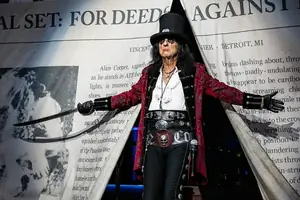
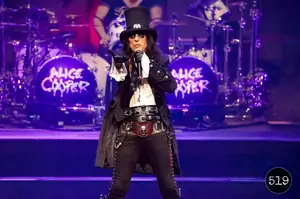
The album opens with "Welcome to the Show", a track that feels tailor-made for a stadium entrance. It has that theatrical flair that Clufetos likely picked up during his tenure with Alice Cooper and Rob Zombie. He has watched the masters at work and he knows how to pace a performance.
"Yeah, we could or second or something. Sometimes it’s cooler to not open with that, I’ve learned a lot from Rob Zombie. Rob wouldn’t always open up with the first most kick ass song, he would give one song and let people know you’re on stage and then the second song is where you would really blast. So quite a smart maneuver and that always stuck in my brain. But yeah, Welcome to the Show is definitely welcome to the show; I mean, come on now," he says.
It is a strategy that mirrors the great theatrical rock shows of the seventies. "Correct. Same kind of idea and then No More Mr. Nice Guy," he says, referencing the Cooper classic.
Clufetos speaks of his former employers with immense respect. In an industry known for burning bridges, he has managed to keep his intact. From Nugent to Sabbath, he has been a student of the game, watching how the legends operate.
"All the guys I’ve played for have been the greatest guys. I’ve been so lucky. Ted Nugent is the greatest guy. I love playing with Alice. I remember my dad took me to see Alice when I was about 13 years old and I go, 'Man, I’m gonna play in that band one day!' and then I did. You know a lot of that’s been I’ve been so fortunate and lucky. Playing for Rob Zombie, he’s a great guy, playing for Ozzy is awesome. Ozzy to me is like an Elvis Presley. He has that kind of charisma and special thing to him. Nobody’s voice sounds like that in the world. You know, he’s the one guy if somebody were to sing an Ozzy song, it just doesn’t work when it’s not his voice. And then, getting to play with the Sabbath guys, that was the peak musically that I’ve been thus far. All the people that I have worked for are gentlemen. I shouldn’t say lucky because it’s a lot of hard work. I’ve been so blessed and fortunate," he insists.
But do not call it a hobby. Clufetos hates that word. To him, music is a trade, a craft that requires the same obsessive dedication as a professional athlete. He looks to icons like Muhammad Ali and Larry Bird for inspiration, finding parallels between the boxing ring, the basketball court and the drum riser.
"You know music, I don’t look at it as a hobby. I don’t like that word when it comes to what I do. A hobby is something you do in your spare time. Music is my craft, it’s something that I’ve been focused on since I picked up the drum sticks. I’m always trying to get better every day and you’ll never reach the end of that, you’ll never reach the destination. So the fun part has got to be the journey to get there and hopefully getting better and learning as you go," he says.
"When you’re young you have a lot of energy and I still have a lot of energy, but you’ve got to look towards the future and look around you. You know, a lot of my inspirations just aren’t music, it can be sports, and you can look at Muhammad Ali. How did he fight when he got older? Even though I’m not a sports guy, I can get a lot of inspiration out of these types of people. When I watched Larry Bird play basketball, I want to play drums, like Larry Bird played basketball, where he’s not the most technically proficient but there’s somehow he was going to win that game from his gut. And that’s how I play drums I play from my gut. And I’m going to, I’m going to put it over when I get on that stage," he continues.
This blue-collar work ethic is pure Detroit. Clufetos does not believe in shortcuts. He believes in the "500 free throws" mentality—the idea that you stay in the room until the job is done perfectly.
"Somehow I’m going to make things happen you know. Through just years and years of sheer hard work I’m going to stay in that drum room and I’m going to go over that song one more time, just like he was going to shoot 500 more free throws. It’s effort and it’s pride and it’s passion and it’s seeing things through and believing in yourself. I learned this from my dad and I learned from my parents. I learned from watching them struggle and I learned through struggling myself that when you have something that you’re passionate about, it can teach you so much. Playing music has taught me how to be a great dad has taught me how to dedicate myself to my family and through doing so, dedicating myself to my music, I’ve met the world’s greatest woman, and I now have this nice family and you know how to take care of them through music. So it’s this circular thing, that’s why it’s more than just a hobby. It’s not a hobby, and it’s not a job," he explains.
The foundation of this discipline was laid by his father, who took him into the clubs of Detroit when he was just a kid. It was a trial by fire. His father did not treat him like a son on the bandstand; he treated him like a professional who had better not miss a beat.
"Absolutely! My dad has been my number one influence in my life and number one supporter, and taught me more than anything else, as a father should be, to be honest with you, I only hope that my daughter looks up to me the same way I look up to my dad. He took me under his wing early and as much as he was loving, he was also a strict disciplinarian and demanded more than he demanded of his ten times older than me musicians. I was held up to a higher standard as an early teenager than these guys that were 50 years old, so he put the clamp down on me and was very demanding. I had to rise to the bar and you always get better when things are expected out of you. I had to rise to the bar of playing with Black Sabbath and be ready to play with Ted Nugent and be ready to play with Ozzy and that all goes back to the early teachings of my dad. Through music, he taught me how to be a man and be responsible and demand that I be responsible so I’m forever in his debt," Clufetos says.
But the musical education did not stop at Detroit rock. There was a secret weapon in his lineage: an uncle who was a jazz musician in New Orleans and a protégé of the legendary Louis Armstrong. This gave Clufetos a rhythmic vocabulary that most heavy metal drummers simply do not possess.
"And through music we share a big bond. Also, my uncle was a musician. He was a jazz musician in New Orleans. Believe it or not, I would go play Dixieland jazz. He was a personal friend and protégé of Louis Armstrong and he loved Louis Armstrong and I would go down every year and play Dixieland gigs at the Jazz Fest with him. So I had this whole other side of upbringing that maybe people wouldn’t quite expect. I played all these what would be called oldies shows with my dad of fifties and sixties artists, if you turn on the radio, I’ve played with 95% of those kind of guys that you’ll hear on those channels, and then playing jazz and watching Louis Armstrong videos with my uncle and watching my uncle practice trumpet. You know, me and my uncle, actually are very similar now that I get older. I practice every day and just stay on it, chip away at the stone every day. He played until the day he died. He kept playing music until his health didn’t allow him to and I’m guessing I’ll do the same thing. I didn’t get into music to be famous. I didn’t get into music to be rich. I got into music as a young kid because it made me feel good and it made me feel good about myself and I just had to do it and that’s still why I do it today. On top of now is how I provide for my family so there’s a higher level of respect for it. I love it and it’s also my livelihood. So there’s two things that collide that you have to continue. You have to be successful and you have to you have to make it happen, which is a good thing. When there’s no safety net, what do you got to do? You got to figure out how to swim," he says.
This versatility is why Clufetos is the guy people call when they need the job done right. Whether it is Dixieland jazz or the doom-laden riffs of Black Sabbath, he approaches the music with the same intensity. He does not just learn a setlist; he learns the DNA of the band.
"I try to learn as much as possible and I try to dig as much as possible. A lot of bands when I joined the band, they’ve had a lot of different musicians, so it gets removed from that initial heartbeat of what the music is about, so if it’s required, I like to try to take it back to that original heartbeat of what made them great. A lot of times drummers get too fancy and I hear it all the time, well I get bored on stage. I never get bored. You can’t get bored of playing great music and sticking to the plan. You’ve got to stick to the plan so you all move in the same way. When you start playing for yourself, it’s over. You don’t hear Tony Iommi going off on a stupid musical tangent, he keeps it in what is best for Black Sabbath, as does Geezer, as does Ozzy. You know what I mean? I don’t think an Ozzy guy gets enough musical respect because he is so charismatic but I’ve learned from these guys. What makes really great legends is that they play for the music and I learned that from my uncle. My uncle would stay on the melody of the trumpet because he learned that from Louis Armstrong. You don’t have to just learn from drummers or your fellow instrumentalists. You can learn as much from watching Chuck Berry play guitar than I do from any drummer, it’s the approach. You can learn as much about watching a basketball player and how he does it. At the end, it’s all accomplishing a task, you want to have a great show. How does somebody maneuver to get there, how do they go about it? That’s what I’m interested in," Clufetos notes.
And despite playing the biggest stages in the world, including a legendary stint with Sabbath at The Palace in Detroit, Clufetos remains remarkably unsentimental about "hometown" shows. To him, every stage is a workplace, and every audience deserves the same level of assault.
"I don’t consider hometown shows any more special than anything. If anything, they’re more of a pain in the ass because you’ve got people that want to see you or people from 20 years ago. Even my family knows, when they come to a hometown show, they’re going to see me after the show because I’m very into the gig and I need to focus before the gig and I need to get away from people and focus on the show. So if I do that in Boston, I don’t change my way in Detroit, I don’t go hang out or whatever. They’ll see me after the show so it’s not any more special or less special, it’s just where we’re playing that day. That being said, when you’re a kid and have been to these places and you go see a concert at The Palace, or Pine Knob or Tiger Stadium, or whatever it is and then you get to play these places, of course it is nice, sure. But I don’t revel in that moment, you know what I mean? I’m there to do a job and every concert should be the most important because that’s how you got to play those places. You know, even when I played a dump club in Michigan and there was nobody there, I was still hoping that somebody would be seeing me play drums. Maybe if there was one person and they did and then it led to the next thing and the next thing and then the next thing. If you don’t take that approach and you pick and choose where you’re going to give it up, your odds are, good luck," he says.
The big break came from Ted Nugent, another Detroit icon who recognized the fire in Clufetos. "Yeah. Before then I played for a guy named Mitch Ryder and the Detroit Wheels which maybe you know, Ted definitely took me out of Detroit and around, and I’m forever indebted to him. He really took me under his wing and he encouraged me and he let me do my thing man," he recalls.
He looks back at his time with Nugent with pride, particularly the performances at Pine Knob. "There’s a DVD I recorded, speaking of Pine Knob, we recorded it at Pine Knob and I was maybe twenty and I’m proud of it. I’m back there playing Motorcity Madhouse and it’s a packed house and I’m rocking. I rocked then just like I rock now so I’m proud of what I’ve done. And Ted was awesome, we’re cut from the same cloth and I’m not comparing myself but we have the same influences. In fact, a lot of the people that I’ve played with, we have the same outlook on how music should be played, so you tend to gravitate to where you’re supposed to go in this business a lot of the time, I’ve been very fortunate that way that I’ve connected with people that are like minded individuals," he says.
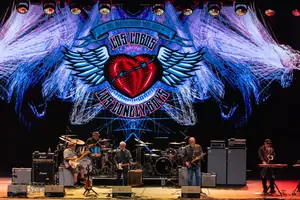
Currently, Clufetos is also part of the Dead Daisies, a "collective" that allows for a rotating cast of high-calibre musicians. "Yeah, I think they use the term a collective, but I mean, even if you look back, how many bands have the original members? You know, not a lot, so even big time bands, it’s hard to keep everybody on the same page but they don’t shy away from that. Different guys come in and different guys come out, it’s part of the thing and I think that kind of makes it cool for their fans," he notes.
But as the world slowly emerges from its slumber, the future of touring remains a question mark. "There’s no plans right now because everything’s so up in the air as much as it’s maybe opening up a little, it’s not opening quite enough. I don’t have any plans not to do anything and I don’t have any plans as of right now to do something but that doesn’t mean I won’t and it doesn’t mean I will. I just don’t know where things stand right now. I will be going out with the Dead Daisies in mid June and early July because they just got some gigs on the books and I’m looking forward to that," he says.
And what of the Prince of Darkness? Clufetos remains a loyal soldier in the Ozzy camp. "Ozzy’s doing okay. We stay in contact here and there with texting and stuff and he has some dates on the books in January, February and I believe they’re moving forward with those and if he says he’s going to do them, I stand behind him that he’ll be there ready to rock. These guys are such great talents and they had such great careers and they know how to get through the hard times because they’ve been in it so long. Like I said, this music thing is a roller coaster. They’ll always be back," he says confidently.
Clufetos has a deep admiration for the longevity of the old guard. He sees the Stones and Aerosmith not as relics, but as benchmarks for commitment. "It’s changed a lot. You see Mick Jagger had heart surgery and six weeks later he was dancing like a fool. There’s commitment there for you, you know what I mean? Talking about supreme commitment. You look at those guys. They still sound great, they still look great, and what a group of guys. In one group maybe five or ten of the original members dies. Even the Stones are not the original you know? They’ve had a few guitar players, Ronnie Wood, Mick Taylor, and Brian Jones. Shit happens in 50 years, you know?" he says.
He also touches on the passing of Neil Peart and the rise of Wolfgang Van Halen, showing a deep empathy for the personal struggles behind the rock star personas. "I really respect Neil. His style of drumming and the Rush style of music isn’t really my exact cup of tea but that being said, I really respect when I hear what kind of person he was. And he went through tragedy and he sounded like a really good man and I respect that and the other two guys how they speak. Another thing, you come through tragedy and Wolfgang Van Halen, I’ve seen some interesting interviews on him and heard him speak and I really respect the young man and how he spoke about his dad. You can tell they had a tight bond and he respected him and you learn from him. And he speaks very well about the tragedy and coming out and doing his own music. So I respect him for that, that’s not an easy thing. Especially being a Van Halen, a son of Eddie Van Halen, and then going and doing your own thing, and he’s very talented at it," he says.
But as for the trolls on social media who target the likes of Wolfgang, Clufetos has no time for them. "Well, people just don’t have anything else better to do so why not knock somebody, you know? They’ve never done anything so they’re sitting on their computer, which is cool, that’s the gig man, you know?" he says with a shrug.
As we wrap up, the conversation turns to the physical medium. *Beat Up by Rock n Roll* sounds like it was made for the warm crackle of vinyl. "I wish they would do a vinyl on this because I think the vibe of the album really lends itself to a turntable. I would love it, but it’s out of my hands to be honest with you," Clufetos concludes.
Whether it is on vinyl, CD or a sweaty stage in a mid-sized theatre, Tommy Clufetos is going to keep hitting things until they sound right. It is not just his job. It is his trip. And we are just lucky he let us ride shotgun for a while.
Get Tickets