
Sitting in the back row of a dimly lit rehearsal hall, you can smell the specific cocktail of stale coffee and desperation that fuels community theatre. It is a grind. Joseph Cardinal is leaning over a script, his eyes tracing the lines of a story he has told before but seems determined to dismantle and rebuild. The swamp is calling again. When he was scouting for his next big swing, one particular property did not just sit on the shelf; it demanded attention with the persistence of a talking donkey.
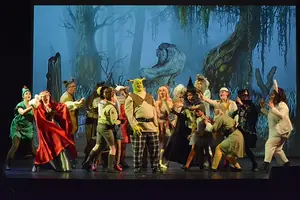
*Shrek The Musical* is not exactly a subtle choice. It is a loud, neon-green behemoth based on the Oscar-winning DreamWorks juggernaut. It carries the weight of a Tony Award-winning pedigree, boasting a score by Jeanine Tesori and a book by David Lindsay-Abaire that leans heavily into the "ogre with layers" metaphor. But for Cardinal, this isn't about chasing the ghost of Broadway. It is about the local stage. He has locked in Windsor dates from Feb. 7 to 16, followed by a quick pivot to Kingsville from Feb. 21 to 23.
The decision to return to the swamp raised a few eyebrows in the local arts scene. Why go back to the well so soon? Cardinal is blunt about the motivation. "It’s been five years since we performed Shrek. I felt the timing was right. The show offers many opportunities for many actors and it is always a crowd pleaser," he says.
There is a cynical view that revivals are just safe bets for the box office. And maybe they are. But in the world of regional theatre, a "crowd pleaser" is the lifeblood that allows a director to take risks elsewhere. Five years is a lifetime in the theatre; it is long enough for a new crop of talent to age into these roles and for an audience to forget the specific choreography of the last outing.
Cardinal is quick to dismiss the idea that this is a carbon copy of his previous effort. He is looking for a total overhaul, not a retouch. When asked if the audience should expect a repeat performance, he clarifies that the changes are fundamental. "Pretty much everything, different actors, different blocking and different choreography," he says.
This is a necessary pivot. If you aren't changing the blocking, you aren't directing; you are just curating a museum exhibit. By swapping out the entire skeletal structure of the movement, Cardinal is forcing the production to find a new rhythm. It is a risky move that prevents the cast from falling into the trap of imitating the film's voice actors.
The appeal of the show, according to Cardinal, lies in the liberation of the caricature. There is something inherently freeing about putting on a prosthetic nose and a fat suit. "From the point of view of the actor it is very enjoyable playing a cartoon character. Audiences love the dancing and singing and positive vibe the show gives off in general," he says.
But there is a trap here. Playing a "cartoon" can often lead to hollow performances where the actor hides behind the makeup. The challenge for this Windsor cast will be finding the pulse beneath the green paint. A positive vibe is great for selling tickets, but it needs a foundation of actual stakes to keep the second act from dragging.
When you strip away the fart jokes and the fairy tale parodies, you are left with the titular ogre. For Cardinal, the draw is the character's refusal to conform to the aesthetics of a traditional leading man. "Well for me it’s Shrek. He makes no bones about being who he is and he ultimately proves looks mean very little in life. Substance is everything," he says.
It is a classic theme, sure. But in an era of hyper-curated social media presence, the idea that "substance is everything" feels almost radical. Shrek is the ultimate anti-hero for the insecure, a character who finds power in his own perceived ugliness. Cardinal seems to be leaning into that grit rather than just the glitter of the fairy tale.
It’s been five years since we performed Shrek. I felt the timing was right. The show offers many opportunities for many actors and it is always a crowd pleaser.
The transition from a 2D animated frame to a three-dimensional stage is a technical nightmare. You have to deal with the physics of a dragon and the logistics of a vertically challenged villain. Cardinal’s philosophy on this transition is surprisingly minimalist. "I think you have to be honest and not attempt to be something you are not," he says.
That honesty is what separates a good production from a theme park attraction. You cannot compete with DreamWorks' CGI budget. If you try to recreate the movie frame-for-frame, you will fail. The theatre demands a different kind of buy-in from the audience—one based on imagination rather than digital perfection.
As a self-professed devotee of the medium, Cardinal finds the sheer scale of the production irresistible. It is a maximalist's dream. "Almost everything about it for me. Great costumes, large cast, fantastic score and a multitude of great characters," he says.
The "multitude of characters" is the real engine here. You have Pinocchio, the Big Bad Wolf and a gallery of discarded fairy tale creatures that allow the ensemble to actually do something other than stand in a line and hum. It turns the stage into a crowded, vibrant mess of colour and personality.
Then there is the music. Jeanine Tesori is a heavyweight, and her work on *Shrek* is deceptively complex. It isn't just bubblegum pop; it’s a sophisticated blend of styles that requires real vocal chops. "In general it is music that you will leave the theatre singing and as always the songs help to tell the tale," Cardinal says.
Songs like "Who I’d Be" offer a glimpse into the emotional interiority of the characters, something the film couldn't quite reach. It is the music that justifies the existence of the stage version. Without it, you’re just watching a live-action remake of a DVD you already own.
Visuals are the primary hurdle for any director tackling this title. You can’t just put a guy in a green t-shirt and call it a day. The costuming requirements are immense, involving a mix of sourcing and bespoke creation. "We purchased, rented and built costumes for this show," Cardinal says.
This hybrid approach is standard for high-level regional theatre. You rent the specialized pieces—the ogre cowls, the mechanical dragon parts—and you build the rest to fit your specific cast. It is a labour-intensive process that consumes a significant portion of the budget, but without the right textures, the illusion collapses instantly.
Casting the "Big Four"—Shrek, Fiona, Donkey and Farquaad—is the most stressful part of the pre-production phase. You need more than just people who can hit the notes. You need chemistry that can survive two hours of heavy prosthetics. "When I cast I always look for people with the abilities to perform the parts. Singing is always essential. For some parts dancing is also a must. There is so much that goes into casting and I could talk about it for days. I will say this I am very happy with our entire cast," Cardinal says.
The "singing is essential" bit is a pointed reminder. Too often, local theatre casts for look or "vibe" and hopes the musical director can fix the vocals in post. Cardinal isn't playing that game. He knows that if the singing isn't there, the show is just a loud, green disaster.
Interestingly, Cardinal is working with the touring version of the script rather than the original Broadway behemoth. This is a tactical choice. The touring version is often leaner, with tighter pacing and orchestrations that don't require a 30-piece pit. "The touring version is what was rented to us," he says.
This version often works better for regional stages. It removes some of the bloat and focuses on the core narrative beats. It is more agile, which is necessary when you are planning to move the entire production from Windsor to Kingsville mid-run.
This musical pivot comes on the heels of Cardinal’s work on *One Flew Over The Cuckoo’s Nest*. Moving from the sterile, oppressive walls of a psychiatric ward to a magical swamp is quite the tonal whiplash. But Cardinal didn't find the drama draining. "Actually it was a nice break for me and I enjoyed it," he says.
Every director needs that palate cleanser. Moving between heavy drama and high-concept musical theatre keeps the creative muscles from atrophying. It prevents a director from becoming a one-trick pony who only knows how to stage a kick-line.
The expansion into Kingsville is the most interesting logistical move of this run. Windsor often acts as a gravity well for local arts, sucking everything into the city centre. By taking the show "out to the county," Cardinal is tapping into an underserved market. "I thought it would be fun to perform the show in another venue and it is something I would like to continue to do," he says.
It is a smart play. There is a hunger for high-quality production values in the smaller towns of Essex County. If you bring the swamp to them, they will show up. It builds a broader base of support for future projects.
As for what comes next, Cardinal is keeping his cards close to his chest, though one Disney titan is already on the horizon. "Well we are doing Frozen Jr. in June but I have not announced my fall show yet. I have time, I want to see what new titles will be released," he says.
He is waiting for the right moment. In theatre, as in the swamp, timing is everything. For now, the focus remains on a big green ogre and the chaotic, colourful world of Duloc. It is a massive undertaking, but Cardinal seems to have the layers required to pull it off.