
Ricky Warwick is the kind of rock star who still smells like the garage. Even after fronting the resurrected remains of Thin Lizzy and leading the charge with Black Star Riders, he carries the grit of a man who spent his youth in Northern Ireland dodging more than just bad reviews. He is the blue-collar poet of the power chord.
Holding the heavy vinyl pressing of his latest solo effort, *When Life Was Hard and Fast*, you can feel the weight of his 30-year trek through the industry. This is not a hobby for Warwick; it is a survival mechanism. He has been the engine behind New Model Army, the roar of The Almighty and now the custodian of Phil Lynott’s ghost.
We caught up with Warwick to discuss the long road from Belfast to the big stages. He is quick to remember his ties to the local scene, specifically the border-town energy of Windsor.
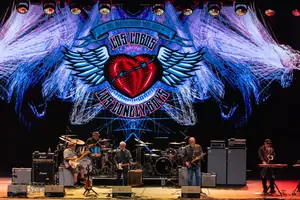
“The last time I played Windsor I opened for Cheap Trick at Caesar’s playing solo acoustic,” he says. “That’s going back about ten years. I have a good friend, Jay Ruston who’s from the area as well. He’s a producer who produced a lot of Black Star Riders stuff. I opened for Def Leppard in Canada a few times, Thin Lizzy has been there a couple times and Black Star Riders opened for Judas Priest a couple of years ago as well, so yes, I got to spend some time in your beautiful country.”
But Warwick’s career is not just a list of opening slots. It is a study in how the right kind of friction creates the best kind of fire. He has spent decades rubbing shoulders with rock royalty, though he treats it with the casual air of a guy meeting a mate at the pub.
When asked if he actively hunts for high-calibre collaborators or if it is just luck, Warwick is humble. He does not see it as networking. He sees it as a byproduct of staying in the game long enough to be trusted by the heavyweights.
“I think it’s one of the perks of doing this for 30 years and meeting artists that inspire and artists I admire and becoming friends with them,” Warwick explains. “Obviously I’m in a fantastic position now where I know these people and I get to work with people who are extremely talented and successful doing what they do. First and foremost they’re my friends now which is wonderful so victim of circumstances but in a good way.”
His most vital connection remains Scott Gorham. The Thin Lizzy guitarist is the link to the golden era of twin-guitar harmonies and Irish soul. Their meeting was not some corporate boardroom handshake; it was a classic rock and roll coincidence involving family and the hallowed grounds of a legendary festival.
“I met Scott back in 1990 I think it was,” Warwick recalls. “My ex-wife and his wife worked together at MTV in Europe so I met Scott’s wife before I met him. So she said I’m working with Christine Gorham and I was like, wait a minute, you work with who? Thin Lizzy was my favourite band and I said, can I meet him? We ended up meeting at Donington, MTV were working there that day and Christine and my ex went up to the festival to work and I was going to meet Scott at the hotel bar and ride up with him later and we hit it off and have been friends ever since.”
And then there is the voice. Warwick possesses a raspy, melodic growl that undeniably echoes the late Phil Lynott. It is not an imitation. It is a spiritual alignment. But it took more than just a similar set of pipes to get him the gig in Thin Lizzy. It took a nudge from Def Leppard’s Joe Elliott to make the connection click for Gorham.
“Oh yeah, he knew about my old band The Almighty and then when I did my first solo record back in 2002, Joe Elliott produced the record in his studio in Dublin and Scott flew over for the weekend to play on a couple of tracks,” Warwick says. “He heard the solo record and was really blown away by it and I guess when he was putting Thin Lizzy back together he talked to Joe and Joe was, why don’t you call up Ricky, he sings in the same sort of vocal range as Phil and you know each other and Scott said that’s a cool idea. I think that’s really how it came about.”
But the transition from being a tribute to a legacy to creating a new one was fraught with internal tension. Black Star Riders was born because the band realized that writing new music under the Thin Lizzy name felt like a betrayal of the very man they were honouring.
“I think playing Thin Lizzy songs live is one thing and writing new material was a step too far, I think it was the elephant in the room,” he admits. “We were getting a little bit carried away with the success of the live shows and then being in a band with writers there was the talk, let’s write some new material. Suddenly, hang on a minute, making a record without Phil, it’s sacrilege you know and I think when the penny dropped, that was a weight off everybody’s chest.”
It was a pivot that saved the band’s soul. By rebranding as Black Star Riders, they could keep the DNA of the Lizzy sound while carving out their own discography. It was a move rooted in common sense and a deep-seated respect for the history of the genre.
“I think it was a matter of letting your head rule your heart and when everybody realized the enormity of what that would be, we decided, we’ve got these killer songs, what are we going to do with them?” Warwick says. “So I sort of said to Scott, we should just put a band together, come up with a band name and put them out and let people hear them and judge them. It might be one album, they might not dig it but we like the songs, let’s get them out there and lo and behold here we are nine years later and ready to do the fifth Black Star Riders album. People have to realize people die but the music doesn’t.”
And this is where Warwick’s integrity shines. He is acutely aware of the "heritage act" trap where bands simply cash in on nostalgia. He has no time for the cynical side of the business.
“If it’s done with sincerity, integrity and played from the heart and delivered with a passion and a power that’s true to the idea the original artist set out to do, I don’t have a problem with that,” Warwick asserts. “You can tell when people are phoning it in or doing it for the money, it stinks. When people do it respectfully and with grace, I think it’s great to keep the music alive. Turn on people who maybe never got to see the original band, maybe never heard of them that can then go back and check out how great the original guys were.”
If it’s done with sincerity, integrity and played from the heart and delivered with a passion and a power that’s true to the idea the original artist set out to do, I don’t have a problem with that. You can tell when people are phoning it in or doing it for the money, it stinks. When people do it respectfully and with grace, I think it’s great to keep the music alive.
Warwick is a workhorse. He does not wait for the muse to strike; he hunts it down. He views songwriting as a vocation, not a vacation.
“I just love to create music. I love to write, I don’t take it for granted,” he says. “I’ve got the greatest job in the world. I get to write songs every day for a living and that in itself is amazing and inspirational. I try to treat it like a job because it is one and I give it the respect it deserves. I’m consumed by music, I’m consumed by what I do. I think about it 24/7 and it’s part of who I am, I don’t really know what else to do.”
Even the global shutdown could not stall his momentum. While the rest of the world was baking bread, Warwick was stacking demos. He treated the pandemic like a forced residency, a chance to sharpen his tools and bank material for the next decade.
“It’s had an effect on touring obviously, which was a huge part of my life, touring as much as we did,” he notes. “Once you accept the realization of what it is, it’s out of your control and it’s a matter of deciding, how am I going to live in the new norm? Is it I’m going to write more, I’m going to read more, I’m going to exercise more, I want to do online shows once a month? How can I be proactive, how can I keep pushing myself and that’s what I’ve done.”
And the results are staggering. He has managed to turn a period of isolation into one of his most productive eras.
“It’s great because not only is the next Black Star Riders album written and demoed and the new solo album is coming out in a couple of weeks but the next one is written and demoed,” Warwick says. “It’s given me the opportunity to spend a year at home with my family which I’ve never done before and that’s been wonderful. There have been a lot of positives, I’m very blessed. There’s a lot of people who are a lot worse off out there who are having a really hard time and I really have nothing to complain about. Everybody has days where they ask is this ever going to end but I try to stay positive and active.”
His new solo record, *When Life Was Hard and Fast*, was actually in the can long before the world stopped. It is a time capsule of pre-pandemic energy that somehow feels even more relevant now.
“The pandemic didn’t affect this album at all,” he clarifies. “It was demoed in 2018 and recorded in April of 2019, and it was always scheduled for release in early 2021. The last year we thought we were going to be touring all year with Black Star Riders. I refer to Black Star Riders as the day job so everything else we schedule around that. We put a Black Star Riders album out at the end of 2019 and we were able to get one European tour in before we went into lockdown but all 2020 was going to be Black Star Riders and promoting the album and 2021 was going to be put out the solo album so the timeline hasn’t changed.”
One of the standout moments on the record is "Clown of Misery." It is a raw, haunting piece of audio that sounds like it was pulled from a dusty attic in the 1940s. The secret to its grit? A lack of expensive microphones.
“Complete accident, I got the idea for the song and grabbed my phone and guitar and threw it down quickly,” Warwick laughs. “I sent it to Keith Nelson who I co-produced the record with and said, I think this can be a contender, what do you think about recording this? He said, it’s done. I said what are you talking about it’s done? It’s an iPhone demo dude, really? He said no man, there’s a feel and desperation that you’ve captured here.”
Nelson’s instinct was right. In an era of over-produced, digital perfection, the iPhone demo offered something real.
“What if we were to make it sound like an old Hank Williams or Woody Guthrie 78 rpm and distort it and crackle it up a bit? I said that’s a great idea and that’s what we did,” Warwick says. “He said, and I agreed with him, that there was a certain angst and desperation in the way that I recorded it that suited the lyrics. He felt that if we glossed it up too much we’d lose that intensity.”
That intensity is hard-coded into Warwick’s DNA. Growing up in Belfast during "The Troubles" provided a backdrop of chaos that most people only see in documentaries. For him, it was just Tuesday.
“I lived there until I was 14 and then we moved to Scotland,” he says. “Mostly I grew up at the height of the troubles over there but when you’re born into something and you don’t know any different, that’s the norm. I just thought that was my childhood, there’s soldiers on the street, riots and bombs going off and shootings.”
It is a chilling admission, but it explains the lack of artifice in his writing. He is not trying to be "street"—he was raised by the pavement.
“That’s normal to me, to me, that’s where I live, so it didn’t register a lot as a kid, we just got on with it as most people did and try to make the best of it,” he explains. “It wasn’t till I moved away, till later life you look back and go, oh my God, that was a dead guy we had to walk around going to school that morning. Remember that time the army came down and blocked the street off? Remember the time the bomb went off? Remember when so and so got killed? Suddenly you go wow and then you reach back in there and all these stories and characters you met growing up suddenly came to the fore in my mind. It wasn’t until much later that I wrote about those experiences. I go back a lot to visit old childhood haunts and friends and relatives and characters that are still with us from those days. The great thing about the Irish is they’re great storytellers and they’re a great source of inspiration for me.”
One of his key partners in mining those memories is Sam Robinson. They share a shorthand that can only come from decades of shared history and a mutual love for their hometown.
“He’s a friend from East Belfast, both the same age, both support the same soccer team,” Warwick says. “Sam’s a great writer, he has a beautiful way with words. He’ll send me something and I always know when I get an email from Sam it’s going to be great. We had similar upbringings, working class families and he has a great way of tapping into shared experiences that we had. When I write with him he makes writing the melodies and chords so easy.”
This collaboration peaked with the album *When Patsy Cline was Crazy and Guy Mitchell Sang the Blues*. It is Warwick’s most personal work, a record that functions as a sonic memoir.
“Absolutely, you’ve nailed it,” Warwick says when the album is compared to a "Brown Dirt Cowboy" style narrative. “It’s our story of growing up in Northern Ireland, it’s our shared childhood and experiences growing up in the 70s and 80s and looking to the future and beyond. That album is predominantly all about growing up in Northern Ireland and what I like about it is you don’t have to be from there just to relate to a lot of the experiences. We specifically wanted to write about a time and an era that was very close to our hearts. It was a lot of fun working with Sam on that record.”
But Warwick’s journey has not always been a straight line to success. There was a time in the late 90s when the wheels fell off. The transition from the heavy, Marshall-stack assault of The Almighty to his current sound was born out of a period of total collapse.
“There’s a lot of factors towards that, through the end of the nineties I found myself back living in Dublin and through some bad choices and doing some things I shouldn’t have been doing I found myself with no publishing deal, no record deal, no management, nasty divorce and feeling sorry for myself,” he admits with brutal honesty. “It wasn’t a good time in my life and I was kind of feeling I might be done with music. I had a few bad experiences in the business side of music, the whole label politics and I was getting really jaded with the whole thing. I tried to walk away from it which is dumb because you can't walk away from something that's in your blood.”
It was Joe Elliott who stepped in to save Warwick from himself. It was a moment of tough love that redirected the course of his life.
“It was really Joe Elliott who’s a friend and who was living in Dublin who grabbed me by the scruff of the neck and said, ‘Look man, what are you doing? You need to be writing songs, that’s what you do, you can’t give up on this.’ And I was saying I’m done man and he said, ‘You love Johnny Cash and Hank Williams, why don’t you pick up an acoustic and just write some tunes?’ and I did, that’s really what started me off down that road. Suddenly here’s this new dimension and new ideas I’d never explored before.”
And that shift changed everything. It stripped away the volume and forced Warwick to focus on the craft of the song.
“When I was in The Almighty I never would have dreamt of playing a solo gig with an acoustic guitar,” he says. “Unless I had my Les Paul and a wall of Marshalls, I’m not doing that. So I totally reinvented myself as a performer, an artist and a musician and I’m still keeping the edge that I always had but it was a real eye opener and once I got my toe in the water I just said okay and dived in and went with it.”
Today, his sound is a hybrid. It is a mix of rock, country and soul that refuses to be pinned down. He is as likely to cite Slayer as he is Motown.
“I just love all kinds of music, I really do, I always have,” Warwick notes. “I’ve never been stuck with one genre, everything from Hank Williams to Slayer and everything in between. I love a lot of Motown, I love a lot of Northern Soul, I love songwriters that have something to say. I’ve always tried to keep those many influences in what I do and not be tied to one thing. I still love loud electric guitars, I love it and love the fact that there’s still lots of loud guitar driven rockers on the record but you can have a song like Time Don’t Seem to Matter which is just a stripped down acoustic song as well. So to be able to cover all that is amazing and it’s really important to me to be able to do all that.”
Looking ahead, the schedule is packed. Warwick does not know how to slow down, and quite frankly, the rock world is better for it.
“Yes, February 19th for the solo album and hopefully we’ll get the Black Star Riders recorded this year, not sure about the release date yet but obviously pandemic pending and not sure when we’ll get in to record,” he concludes. “I’d like to think that when we do get it out that we’ll be able to go out and tour.”
Ricky Warwick is the genuine article. In an industry of manufactured rebellion, he is the real deal—a working-class hero with a guitar and a story that is far from over.