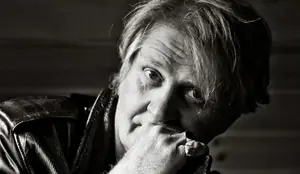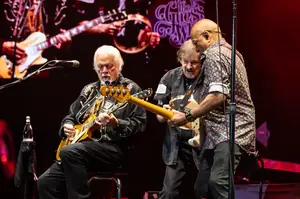

Standing in the wings of The Chrysler Theatre, you can practically smell the history of the place—a mix of floor wax, old velvet and the electric hum of a stage waiting for a legend. This is Windsor, a border town that knows a thing or two about the grit required to sustain a career for half a century. Tom Cochrane is not just another name on a marquee here. He is a fixture of the Canadian identity, a man whose gravel-toned voice has provided the soundtrack for every highway stretch from St. John’s to Victoria.
But Cochrane is not just in town to play the hits and collect a cheque. On Mar. 8, he anchors the YUNITY Bluesfest, a two-night stand designed to funnel resources into The Windsor Cancer Centre Foundation and Transition To Betterness. It is a full-band affair, promised to be loud and tight, yet the man himself remains remarkably unpretentious about his role in the philanthropic machine.
The impulse to give back was not some calculated PR move cooked up in a boardroom. It was an organic evolution that started the moment his records began to move units. Cochrane reflects on the early days of his ascent, noting how the responsibility of fame caught up with him.
"I think right from the beginning, as soon as you start to make a mark as a professional musician, there's always the odd thing to do," he says. "To me, these things choose you in a lot of cases and to be honest, it's an easy thing to do to help people out a little."
There is a specific nobility in the way Cochrane views his platform. Before he was a rock star, he was a kid obsessed with the integrity of the press. He watched the giants of the mid-century newsroom and saw a path for himself that involved more than just pentatonic scales and tour buses.
“I always wanted to be a journalist. I was a funny kid. Edward R. Murrow and Schlesinger and Walter Cronkite, a little bit later, Peter Jennings, some of those people became big heroes of mine. I thought there was nothing more noble than going to some of these war-torn places where there was famine and natural disasters and stuff, and putting yourself in danger’s way and reporting back the truth. After the Tears Are Not Enough project, I thought, here we are, we're all a bunch of privileged musicians, and we're all going to go back to our lives hustling for money and making records and we're going to forget all about this," he admits. "I decided, well, I'm not comfortable with that."
That discomfort led to a pivotal expedition with World Vision. It was not a photo op. It was a descent into the visceral, jagged edges of the human condition in Africa. While many of his peers were chasing chart positions, Cochrane was witnessing the kind of trauma that does not wash off with a hot shower.
"It was a real eye opener, and it was a cathartic experience. It was a disturbing experience, and it put a lot of scars on my psyche," he recalls. "I came back probably with post-traumatic stress disorder. We were shot at. I saw people die for the first time in my life."
The fallout of that trip changed the trajectory of Canadian music. Most people hear "Life Is a Highway" and think of a road trip anthem, but the subtext is much darker. It was a survival mechanism, a frantic attempt to claw back some sense of optimism after seeing the worst of the world. It was a pep talk delivered at 3:00 a.m. to a man who had seen too much.
"I used to call myself a sonic journalist prior to that. And after that, it was like, I think those of us that make music are therapists. First and foremost, we're therapists for ourselves, and then you hope that resonates with other people, and that song did," Cochrane reflects.
His commitment to the cause did not stop with a single hit. Whether it was the "Canada for Asia" fundraiser following the 2005 tsunami or local Windsor initiatives, Cochrane has maintained a steady presence in the humanitarian sector.
"I feel very proud about those efforts," he says. "It's not so hard lending your name to some of these things and helping out in whatever small way you can."
Despite the hardware—the Officer of the Order of Canada, the Canadian Music Hall of Fame induction and eight Juno awards—Cochrane treats the mechanics of his career with a blue-collar pragmatism. He separates the toil of the industry from the lightning strike of the creative process.
"I don't look at it as a job. I look at the process as a job. The process of actually putting a band together, rehearsing the band, getting a crew and putting shows together, that's all part of the profession, but the actual songwriting is more a part of your essence. It's in your blood," he explains.
The DNA of his writing is rooted in the folk tradition. He looks at guys like Dylan and Gordon Lightfoot not just as peers, but as architects of a specific kind of Canadian storytelling. It is the difference between a builder and an architect.
"A very successful songwriter said to me, and it was very flattering, and I don't know if it's 100% true. He said, 'Tom, I'm a craftsman. I sit down and I craft songs, and I'm very good at it and very successful at it,'" Cochrane recalls. "He said, 'You're an artist. You work from inspiration.' I said, yeah, it's pretty much true."
It was a real eye opener, and it was a cathartic experience. It was a disturbing experience, and it put a lot of scars on my psyche. I came back probably with post-traumatic stress disorder. We were shot at. I saw people die for the first time in my life.
That artistic streak was never more evident than when he stood side-stage to honour Gordon Lightfoot. It was a moment of high tension, with Lightfoot’s health in a precarious state, making the performance of "Early Morning Rain" feel like a high-wire act without a net.
"I was very honoured to be asked to present Gordon Lightfoot the singer-songwriter award and he was very sick at the time. We didn't even think he was going to show up. We weren't even sure how bad it was and whether he was going to survive," Cochrane recounts. "I finished doing the speech and I also sang Early Morning Rain. I was nervous enough singing that with Sylvia Tyson sitting there in front of me, much less when I looked side stage and there's Gordon Lightfoot with a shit-eating grin on his face."
The connection between the two men was profound. Cochrane saw in Lightfoot a kindred spirit—a man who painted landscapes with phonetics.
"I'm glad I didn't know he was there before I started that song, because I wouldn't have been able to sing it. But he showed up to accept the award. The late Barry Harvey who was managing Gordon at the time said, 'You know, Gordon, read your speech every day for the next six months.' It was because I compared him to a Group of Seven painter. That's the way he saw himself, as a painter. He even used to hang out at The Pilot in Yorkville in the early days, and that's where all the Group of Seven used to hang out."
This refusal to "write by committee" is what has kept Cochrane’s catalogue from sounding like a dated relic of the 1980s. He protects the autonomy of his work with a fierce, almost religious devotion.
"Every time I go out on Gordon's beloved Georgian Bay, one of his songs goes through my head. He really appreciated the fact that intuitively I understood where he was coming from, and that stuff means a lot to me, but I feel like that too," Cochrane explains. "I feel a bit like I'm a painter, and to have somebody else come and say, oh, no, your paint needs more purple. I'm going to take a brush and I'm going to put some purple in it over here. I think Gordon would agree with me that's not being a songwriter, that's writing by committee. I'm not saying that's wrong, but it just isn't the way I've done things. To me, it's a very personal, spiritual process, but sometimes not."
He is under no illusions that every swing is a home run. But the ones that landed—"White Hot", "Boy Inside The Man", "Untouchable One"—have become part of the national lexicon.
"I've written a lot of junk, too, but it's never for lack of trying. And I've always tried to write songs that are timeless. And the songs we play now, like White Hot, Boy Inside The Man, Untouchable One, Life is a Highway, they stand the test of time."
One of the deepest cuts in his repertoire, "Napoleon Sheds His Skin" from the Red Rider era, reveals a fascination with the Chilean poet Pablo Neruda. It is a dense, literary track that most rock stars wouldn't have the guts to record.
“I became fascinated with Pablo Neruda after picking up this book called The Captain's Verses. He actually had changed his name for that. His name wasn't Neruda. Neruda was another poet or playwright from Czechoslovakia, I believe, and he borrowed that name as a pseudonym or an alias. And he wrote this book of poems that, oh, my God, when I read his poems, they just hit me so hard, like a diamond bullet. His poetry, the passion of it, the way he would draw parallels between love and passion and nature. Very few poets achieved what he did.”
The translation from Spanish to English didn't dull the impact. For Cochrane, it was a spark that ignited an entire album cycle.
“The way it translated into English, I can't even imagine reading it in Spanish and understanding it in Spanish. So, the album Neruda was inspired by Pablo Neruda’s writing. I didn't borrow any of his work, but I read a lot when I'm going into a writing phase and was reading a lot of his poetry and the songs started tumbling out of me. Some of them I understood, some of them I didn't. I understand what Napoleon was about and let's just say it's allegorical. It's not about anybody specific.”
“It could be about Che Guevara, maybe, who knows? But the point is, it's about how we get ourselves into positions in life, in struggles, in wars, in conflicts. And really, at the end of the day, we just want to get back to our family and our loved ones, and we all share that. And here's where the story gets interesting, and I inspired a lot of people through that record. That's one good thing you can do as a writer. A lot of people would write to me and say, wow, I didn't know about Pablo Neruda and now I'm fascinated by him. Some people did their thesis on him in school. One man, for example, was my lawyer's dad, who did a thesis on him and was so fascinated with Neruda and Latin American poetry in general.”
The story took a surreal, cosmic turn when Cochrane discovered a literal bloodline connection to Neruda’s world. Through a gift from a fan, he learned that his namesake, Thomas William Cochrane, was a naval hero in Chile.
“He actually travelled to Chile and brought back this book and he gave it to Pat to give to me. It's in Spanish, but it has beautiful pictures and it's Pablo Neruda, Isla Negra, and that was his last residence south of Valparaiso. So I'm reading it, and I come across this section which says he collected figureheads from old boats in this beautiful house he had at the edge of the ocean which is now a museum there. A lot of them were four, five or six hundred years old figureheads from the front of ships. One of them captured my attention, and I started reading this, and I picked up Lord Cochrane, Thomas William Cochrane. That's my name. Thomas William Cochrane.”
“I ended up calling a friend of mine at the time who understood Spanish. I said, “What is this?” I took a picture of it and I sent it to her, and she said, "Well, apparently, this is the figurehead of a ship of Thomas William Cochrane and Pablo Neruda wrote about him and revered him for helping Chile attain their freedom from Spain.”
This was not just a coincidence; it was a genealogical bomb. His ancestor, Lord Dundonald, was a man Napoleon himself dubbed the "Sea Wolf."
"I knew that a distant relative was Lord Dundonald, and he became a sea admiral and Napoleon called him the Sea Wolf. I didn't know any of this when I wrote this album. He was one of the original pirates, but back then, there were different categories of pirates. He was an admiral in the British navy and in certain situations, they would get a percentage of the bounty. If they conquered a bunch of Spanish ships, for instance, they got a percentage of the bounty. Long story short, he got defrocked. He went to Chile and headed up their navy and helped them win their independence. He was a hero of Pablo Neruda."
The connection deepens with the tragic end of Neruda’s life, a story that sounds more like a political thriller than music history.
"Neruda's last book is dedicated to Thomas William Cochrane, my relative. I had no idea there's a statue in Valparaiso dedicated to Thomas William Cochrane, the Sea Wolf, in the middle of town. It's one of those things that still gives me chills. There are forces here that are at work that we don't know about."
"Shortly after Neruda wrote that last book of poetry, he was assassinated. He came home and he said, I think they've killed me. He'd gone to a cocktail party, and he came back and he said, I felt a prick in my side. Three days later he died of prostate cancer. You don't die in three days of prostate cancer."
While the song doesn't explicitly detail the "Sea Wolf," the emotional weight is undeniable.
"This doesn't really explain Napoleon Sheds His Skin other than, as I said, it's a study of what we trade on, and that in the end, it's about family and love."
When he isn't exploring the historical ties of the 19th-century navy, Cochrane is often on the road with Bill Bell. The duo recently played Churchill, Manitoba, flying in on a seven-seater to perform for a tiny, isolated community. It is a far cry from the arena tours of the 90s, but it offers a different kind of payoff.
"It's very intimate. I get to tell a lot of these stories. People are all ears, and they're so open to hearing the genesis of songs. Bill and I just have free will, we jam, and we vamp on this stuff. Sometimes I go out and I'll talk for three or four minutes before I start the first song, which a lot of times is Big League or sometimes Ocean Blue, but I find it very cathartic for me and Billy and the audience. We're like clairvoyant when we work together. It's a real kind of psychic connection, and he just knows where I'm going with it."
For the Windsor crowd, the question of the format has been a hot topic. Cochrane wants to ensure the fans know exactly what they are getting at the Chrysler Theatre.
"I should make the point because I was asked by a couple of people that are coming to the show in Windsor if this is going to be a duo show or with a full band. This will be with a full band, although it may be a slightly longer show because I will want to do three or four acoustic songs in the middle."
At 70, Cochrane shows no signs of the typical veteran-rocker fatigue. His voice is remarkably intact, perhaps even richer for the years spent on the road. He views his longevity not as a feat of endurance, but as a gift he’s still unwrapping.
"30 years ago, you were still trying to figure it all out and trying to establish yourself. There was a certain urgency there. Obviously, you're at the top of your game, which I still think we are. My golf game is definitely going downhill, but my singing is getting better all the time, so why not keep doing what you're meant to do and what you love doing? My dear old dad said to me once, 'Tote, you're lucky you're making a living at your hobby, so God's smiling on you.' So, I try to be appreciative of that every moment I step on stage, and I love doing it. So as long as there's people in those seats and that want to come out and hear the music, I'll keep doing it.