
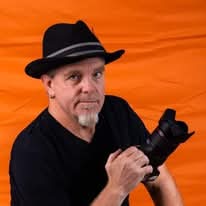
Sitting in a dim corner of a Toronto dive, flipping through the high-gloss pages of a 20-page comic book, you do not expect the illustrator to be the same man who spent the last decade screaming over Marshall stacks. But Shane Connery Volk has always been an outlier in the Canadian circuit. The Saskatoon native, primarily known as the throat behind One Bad Son, has built a career on a specific brand of prairie grit—vocals that soar somewhere between a dusty canyon and a sold-out stadium. We have heard it on "Scarecrows" and the cinematic "Raging Bull", tracks that felt like they were ripped from the celluloid of a Peckinpah flick.
Now, he is pivoting. His debut solo single, "Shiver", is not just a song; it is a multimedia opening salvo. The track arrives tethered to a comic book that explores the existential rot of a man trapped in the gears of daily ritual, haunted by the ghost of a purpose he cannot quite name. It is meta-commentary at its finest. Volk is not just playing a character; he is living the transition from a frontman in a machine to an artist with a pen. We caught up with him to talk about the solo pivot, the ink on his fingers and the state of the One Bad Son union.
He is blunt about why "Shiver" is surfacing now, nearly two years after the world stopped spinning. The industry likes to pretend everything is a calculated move, but Volk admits it was more about clearing the pipes.
"I had this song recorded in 2019," Volk says. "The long story is that I’ve accumulated a lot of songs just writing for One Bad Son, that just didn’t work for the band. Songs I really liked. When you’re trimming an album down from 30 songs to 10 or 12, you end up having a lot leftover. So I’ve kind of accumulated a lot of ideas over the years. I recorded this song in 2019. My plans were to record an EP and have it ready for 2020. While OBS wasn’t on the road, I was going to release these and do a little thing and stay busy. Of course, like everybody else, COVID-19 changed all of those plans."
The pandemic did more than just stall the release; it killed the momentum of the traditional "EP cycle" for Volk. But there is a certain freedom in the collapse of the old world. If you cannot tour, you might as well drop the baggage.
"So I’ve been sitting on this song and not sure what to do with it, and finally just decided, in a world where you can’t plan anything, just put it out," he explains. "I think I was stuck in the head space of having a larger plan. And I’m like, 'You can’t plan anyway so just put it out. I had the video recorded and stuff. So I just figured it’s a good time to just put it out, I think people need new music right now as well. I know I do. So I figured just put it out, see how it goes and then just roll with it and kind of figure the rest out on the fly."
The move from a full EP to a singular drop was not just a creative choice—it was a financial one. Let’s be real: rock and roll is a labour of love that requires a touring budget to breathe. When the stages went dark, the bank accounts followed. Volk pivoted to his second love, drawing, landing a gig with Mad Cave Studios.
"Yeah, absolutely. A couple reasons. That’s kind of number one. Not having income," Volk says regarding the delay. "My main source of income is from touring. So not having two years of that really puts a dent in your plans for funding these things. So that, and I landed this gig drawing comic books, which is also another passion and dream of mine. I had put a lot of work into that. All of those things combined just shelve that idea of going to record. Also the logistics of recording, especially when lockdowns were on and heavy. And even now, you just want to be safe about everything. So I just figured why push it? Why stress out trying to get and record more? And just get the one out while I’ve got it, and do more as they come."
"Shiver" feels heavy, not in a metal sense, but in a spiritual one. It is the sound of a man looking in the mirror and wondering if the leather jacket still fits. Volk has been doodling in the margins since he was a kid in Saskatchewan, but the success of One Bad Son forced those pens into a drawer for 16 years.
"Oh, absolutely," he says. "Like a lot of artists, I was always the kid doodling in class and all those things. And when I discovered music and really kind of discovered my voice and my love for music that took centre stage. And when One Bad Son was really starting, you have to throw everything at that. It’s not a part-time job. But I’ve always designed and worked on some of the album artwork and designed merchant, that sort of thing. But you really hit at the nail on the head with the song. It is very much autobiographical after 16 plus years to that point of touring and writing and having such great radio success, just losing the place that my creativity originally came from. I think it’s a very normal thing for artists who have hit any level of success to start getting lost in the machine. You used to write songs because you love to write and you like to hang with your friends and have fun. Now you’re writing songs because you’re chasing hits, you’re trying to recreate and better the last amount of success."
That is the trap. The industry demands more of the same, but better. It is a soul-crushing cycle that turns art into an assembly line. Volk felt the weight of that expectation every time he picked up a guitar.
"That doesn’t come from a place of vanity. It just happened so naturally," he admits. "One day I think I woke up and wondered how I got there. I pick my guitar up and think, 'Okay, I’ve got to try to write a hit. I’ve got to try to...' And I think that really started to wear me down. And after the last record, I was just creatively drained, so 'Shiver' was my way of getting back to some sense of where my creativity started from, which is just, I love music. I love to write. I love to sing. It works for anybody who has had a dream or had something in their heart or their soul that they just lost track of and trying to get that back. Absolutely autobiographical."
Breaking into the comic industry is arguably harder than getting a song on the radio. It is a closed shop, dominated by legacy names and a brutal freelance culture. Volk's entry was a mix of marital wisdom and a Florida-based contest. His wife, it seems, was the one to pull the parachute.
"For me it was a bit of an interesting path," Volk says. "Again, I’ve been drawing my whole life and I always knew at some point I was going to push a little harder into my art and especially into comic art. And then my wife said something really great to me. And this was around the time that I was losing track of myself. And she said, 'You know what your problem is? You’re not a musician. You’re an artist. Do art. You can do it all. Write music, play it, but you don’t have to focus so hard on that one thing that you forget everything else.' And that really struck a chord with me. So I decided, 'Okay, now’s the time to really start to dig into that comic art.' So I spent close to two years, really, really trying to hone my skill and working."
He found a contest through Mad Cave Studios, a rising indie publisher. He submitted five pages. He won. Then the reality of the deadline hit him like a freight train.
One really great thing I love about Rock and Roll now in 2021 is I feel like you can be what you are without having to really chase a sound. ... Nowadays it’s great because there’s so much music out there. ... People are just so exposed to so much great music that they’re like, 'Well, yeah, I listen to country, I listen to rock. I listen to metal.' ... It’s a cool time because it allows us bands like One Bad Son to tour with Judas Priest and Def Leppard. ... What a freeing thing that is to just open your world that way.
"And then randomly online, I found a contest that a company out of Florida runs. This company, Mad Cave Studios that I now work for. They run a contest to find new artists and writers, which is very, very unheard of in comic books," he explains. "So just on a whim, I tried that, I submitted a five-page story and, very long story short, I won. And then they handed me this comic book series and my world crashed in around me and I realized I don’t know how to draw comic books. The best way to learn anything is to learn on the job. So I went into it head first and really learned a lot through those first five issues. And now I’m doing that as well as music and a bit of acting. I always say I have two and a half careers on the go right now."
The series became a sleeper hit, shattering sales records for the publisher. It is a rare win in a medium that usually eats newcomers alive. Volk is currently working on the second series, still slightly dazed by the reception.
"It is, yeah," he says of the series' success. "It was really very surprising for all of us, because I’m a realist when it comes to my art. Like 'Shiver', I’m not putting a bunch of radio behind it. The idea is just to get it out and the comic art was the same way. I’ve got to start somewhere. I know I’m not to the pro level I want to be at yet, but I figured, get it out, it’s a cool story. There’s some good stuff in here and then just start building your career. But somehow, it got a lot of hype coming out of the gates and people really connected with the story and people connected with my art. So, super fortunate. It broke all of their sales records and went into multiple printings and now I’m actually drawing the second series. It was a huge hit, which I wasn’t expecting it. It’s just very, very cool."
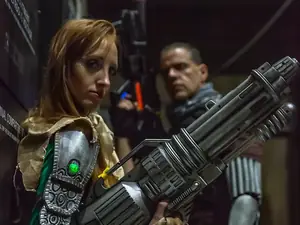
The "Shiver" comic isn't just a sidecar; it is a direct adaptation of the single's music video. It is a smart play in a digital age—give the fans something tactile to hold while they stream the audio. You can find it on Amazon, or if you are in Saskatoon, at the local staple Red Skull Comics.
"Well, it’s ongoing with my plan," Volk says. "It’s going to be through Amazon. You can get the digital copy. So anybody in the world can get the digital copy of the book. It’s tied in with the video. It’s like a comic adaptation of the video. So when the video comes out a week after 'Shiver' drops, you’ll be able to get the comic on Amazon. But I also have some physical copies that I’m selling at my local comic book store, Red Skull Comics down the street from me, they’re going to sell a few and then I’ll be selling them at shows as well. So it’s incentive to come watch me play if you want a comic book."
Volk's aesthetic is rooted in a pre-internet isolation. Growing up on a farm in Western Saskatchewan meant your influences were whatever you could find in a two-hour radius. It was a visual and auditory scavenger hunt.
"Well it’s an interesting question for me. My history with comics is exactly like my history with music," he notes. "I grew up on a farm in Western Saskatchewan and especially at that time, this is pre-internet, that was early 90s when, as everybody is in their formative years, 12, 13, 14, you really start to find the music you love and find the art you love. So when I was getting interested in comic books and music, there wasn’t much to be had. The closest city was two hours away, where Saskatoon is. So it was only these little windows of time that I could come into town and there was no internet. So you weren’t just discovering stuff on iTunes or Spotify. So I was pretty limited with stuff."
The 1989 Batman film was the catalyst. It was the gateway drug to a world of ink and shadow. He would buy books based on the covers, much to the chagrin of the shop purists who demanded he follow the "correct" continuity.
"I think when Batman 89, the movie came out just really blew my mind and I thought, 'Wow, that’s just the thing.' So I would go in and I didn’t know anything about comics like I didn’t know anything about music. So I would pick up a CD I liked, sometimes just based on the cover art, I’d go to a comic shop and buy Batman books or Superman books. And there was no real rhyme or reason. I’m an art driven guy, a visual and audio guy. I like the art, I’d pick it up. And the comic shop guys would always be pissed because they’d say, 'Well, that’s not part of the series that you’re reading.' I’m like, 'I don’t care. I just want the pictures.'" He laughs at the memory. "But then of course, as I’ve gotten older now, you get in into classics like Watchmen. And I think when I finally read Dark Night Returns, that sort of stuff totally blew my mind. So just like music. I got into it, started to discover it. As I’ve gotten older, I’ve gone back to my heroes influences and that’s where you really start to open your mind when you see the people that you love, what they were listening to and what art they were looking at. Yeah, totally opens your world."
Musically, "Shiver" is a strange beast. It has been called "twangy rock country", but there is a dark, Seattle-adjacent undercurrent. It sounds like Layne Staley took a detour through a Nashville boneyard.
"Oh, dude, hey, you’re speaking my language. I love it," Volk says when Alice In Chains is mentioned. "That’s a great pickup because obviously I’m a rock guy and growing up in the 90s again, Soundgarden, Alice In Chains, Nirvana, those bands were my bands. But yeah, when I discovered Johnny Cash and started getting into especially outlaw country, like Waylon Jennings and that kind of stuff really spoke to me. But the cool thing is I feel like bands like Alice In Chains, not to say that bands don’t do it now, but it was still an era coming out of what bands like Led Zeppelin were doing. Led Zeppelin was a huge influence on all of those 90s bands."
The connection between the 70s gods and the 90s grungers is the acoustic experimentation. It is about the "different" sound—the ability to be a rock band that isn't afraid of a mandolin or a country slide.
"The things Led Zeppelin had that I loved, and I feel like Alice In Chains and Soundgarden and those bands to a degree. Yeah, they’re a rock band, but they have a ton of acoustic songs and not only are they acoustic, but they’re different. You listen to something and think, 'Wow, that’s kind of a... That’s actually a country song that they’re doing, or they’re version of it.' And Alice In Chains’ got great acoustic tunes. I always loved bands that would do both or just experiment with different sounds and not be afraid of like, 'Well, that’s not really an Alice In Chains’ song.' Honestly, One Bad Son has done that. I wrote a song called The Outlaw Josey Wales based on one of my favorite Clint Eastwood Westerns. It’s got the sound of Shiver. I initially wrote it thinking, 'Well, I’ll put that on a solo EP at some point,' but the band loved it. Into their credit, Kurt is really good rated at identifying great ideas. And he was like, 'Why don’t we do that song?' So it was cool. One Bad Son has embraced that to a degree as well to try to do different stuff. But for myself, I want to dig even deeper into different acoustic kind of based stuff right now. Who knows where my tastes go from here."
The industry hates this kind of genre-blurring. Marketing departments want a box. They want a label they can slap on a Spotify playlist. Volk finds the whole exercise tedious, even if it is a necessary evil of the digital age.
"Yeah. Well, because one of the things that I think every artist hates this question and I realize that you kind of have to do it, especially with streaming and there’s just so much content out there is like, 'Well, what kind of music is it? What are you?' And you have say like, 'Well we’re a rock band.' And even now it’s like, 'Well, we’re a rock, but we’re classic rock, or we’re this sub genre of the sub genre, or you have to be its country period.' People aren’t to blame, but I think there’s just so much stuff out there that when you’re trying to market your music, radio and everybody else wants to know like, 'Okay, well this new Shane Connery Volk single is country.' And I’ll say, 'Well, it’s not.' And like, 'Well, it’s rock.' And you’re like, 'Well, it’s kind of in this gray area.' And I think that’s a bit harder to do now because people want these really hard definitions of what you sound like."
Despite the "gray area", One Bad Son has shared stages with everyone from Judas Priest to The Rolling Stones. It is a testament to the fact that rock fans are more eclectic than the suits give them credit for. In the 90s, you had to pick a side. In 2021, the walls have crumbled.
"Yeah. That’s the great thing with rock is you have a common thread," Volk explains. "And one really great thing I love about Rock and Roll now in 2021 is I feel like you can be what you are without having to really chase a sound. I know when we started out in 2004, 2005, it was like, you had to be, say Three Days Grace, or you had to be whatever, I think new metal was still a thing back then. You had to be a thing to be successful in that moment. Otherwise, you were, 'Wow, you guys sound a little too classic and that’s not the thing anymore.' Whereas I think nowadays it’s great because there’s so much music out there. Nowadays, I think people are just so exposed to so much great music that they’re like, 'Well, yeah, I listen to country, I listen to rock. I listen to metal. And even in the rock genre, you can say, 'Yeah, I love Shinedown. I also love Def Leppard.' You could listen to Warrant and listen to System of a Down and people don’t really bat an eye because it’s like, well, yeah, everyone’s into everything kind of. So it’s a cool time because it allows us bands like One Bad Son to tour with Judas Priest and Def Leppard. So we can tour with modern bands, and we can tour with classic rock bands. What a freeing thing that is to just open your world that way."
The band itself has seen some shifts. Bassist Adam Hicks recently departed, a move that Volk attributes to the general upheaval of the COVID era. But the core remains. Drummer Kurt Dahl, who also happens to be a high-powered entertainment lawyer, continues to be the engine.
"Well, no. It’s hard to know," Volk says of Hicks's exit. "I know that COVID has been very difficult on a lot of people and I can’t exactly speak to Hicks’s motivations except for that, it’s a lot of personal stuff for a lot of people going through COVID and I think it’s opened a lot of people’s eyes to a very new world and not knowing what that world is. We’re still tight with Adam. We’re always going to be friends. I was in a band with a guy for 15 years. He’s a bro, but everybody’s got their path in life, and he’s going down a new path and we wish him well. You really just want people to be happy. But with Kurt and I, I think it’s been very difficult and it is more and more difficult for bands to just make their bread and butter on just music. And you see so many artists now that are like me and like Kurt, where they’re like, 'Yeah, I play music, but I’ve also got this and I’ve got this,' and they’re really grinding harder than ever to just make a life in the arts."
Having a lawyer in the band is more than just a meme; it is a survival tactic. Dahl’s work ethic proved to Volk that the "obsessive" model of being a musician is dead. You can be a professional and a creative at the same time.
"It’s helped 100% having an entertainment lawyer in the band. He’s an anomaly, he’s an incredibly good lawyer, absolutely, but he’s also creative and a great writer and an amazing performer. He’s my favorite drummer ever. So very cool, and for me, I was inspired by his work ethic going on tour and he’s drafting up agreements and doing work and then we’re sound checking and playing. And I realized I can do that too. He set a great example for me to be able to do more than just one thing."
This new perspective has stripped away the stress. One Bad Son is no longer a desperate grind; it is a passion project with a massive following. They have moved beyond the need to say "yes" to every soul-sucking gig.
"The last thing I’ll say is that it’s a really freeing time for Kurt and I, because we have other successful things and we are very open with each other about how to integrate all those things now, because the last thing him and I want to do is lose music," Volk notes. "I think playing big rock shows is our passion. That’s always what’s fueled us. It brings out the 15 year old rock fan in us every time we play. So I think him and I are definitely going to be doing One Bad Son as long as we can because we love it, we love the fans. But the cool thing now is that we don’t have to do it in this near obsessive way, where if you’re not touring every day of the year and saying yes to everything and really wearing yourself down, then you’re not doing it right. We’ve moved beyond that. So we have our successes outside of One Bad Son, which also helps generate money and all those things. So that the band can be far more enjoyable now, in this way of like, 'It’s our love and our passion to play rock and roll and play it together.' So we can actually enjoy and go on tour and not be stressed out and all of those things, and then come back and do our other stuff and kind of have, as I’ve tried to articulate in the past, have a life that is art and is everything as opposed to this one very difficult obsessive thing that you’re grinding at all the time. So just having a whole life in art and music."
The future of One Bad Son is already in motion. With a new lineup and a fresh batch of songs, the band is preparing for a 2022 return. The first jam back was, according to Volk, something close to a religious experience.
"Yeah, absolutely. So we’ve got a new guitar player and we’ve got a bass player and we’ve had our first jam as a four piece since, I think our last show was early 2020. Man, what a feeling that was to have four people in a room playing One Bad Son songs. I can’t even describe it. It was like Christmas times 1,000. Kurt and I have been writing together, doing some writing with some other members of the band here too. The plan is, we’re not sure if we’re doing full album next year or singles, but definitely new music and playing some shows in 2022."
Whether he is holding a microphone or a brush, Volk is finally comfortable in his own skin. "Shiver" is the proof that you don't have to choose. You just have to do the work. Find more at ShaneConneryVolk.com or OneBadSon.com.