
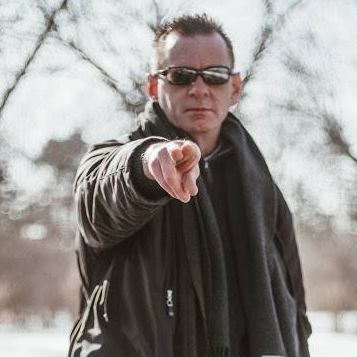
Standing on the corner of Richmond and Dundas, you can practically hear the echoes of London’s hip hop history rattling through the brickwork. It is a city that often gets overlooked in the shadow of Toronto’s monolithic industry, but for Casper Marcus, this is the training ground that forged a survivor. Marcus isn't just another name on a bill at London Music Hall or a local opener at Start.ca Rock The Park. He is a fixture.
And he has the scars and the discography to prove it. Currently signed to From Nothin Entertainment, Marcus operates with a relentless pace that suggests he is perpetually outrunning his own past. But to understand the artist who now mentors the next generation at Western University’s Rap Camp, you have to look at the kid who arrived here with nothing but a new family and a lot of noise in his head.
The origin story is pure Forest City lore. Marcus did not just stumble into a booth; he was practically drafted into it by circumstance and a bit of local luck.
"It all started when I was adopted by my uncle here in London at age 11," Marcus says. "The next year, I ended up meeting a producer named Mike Tompkins and we did a live rap performance at Western University."
That early exposure to Tompkins—who would later become a global vocal sensation—was the spark. But the real education happened in the trenches of the mid-2000s. Before the era of viral TikTok clips, you had to earn your stripes in rooms that smelled of stale beer and desperation.
"I constantly freestyle battled local rappers and took part in coffee house/open mic nights," Marcus recalls. "Limited in venues I could perform at when I was not legal age, I found a place to sharpen my skills at now defunct yet legendary places like The Embassy, The Drink, The APK and The Wick."
Anyone who spent time at The Wick or The Embassy knows those stages were unforgiving. If you couldn't hold a mic and a crowd’s attention simultaneously, you were eaten alive. Marcus didn't just survive; he used those rooms to build a technical foundation that most modern melodic rappers lack.
By 2007, the local fishbowl was getting too small. Marcus began the arduous process of breaking into the Toronto circuit, a move that often kills the momentum of lesser artists.
"I released many projects and around 2007 I began breaking into the Toronto Hip Hop scene," he says. "I started a series of mixtapes called The Marcus Morris Mixtapes and won multiple artist of the year awards for that. I was opening for high profile artists and eventually started touring Europe."
The transition from local battler to international touring artist is a pivot many attempt but few execute. Marcus attributes his longevity to a work ethic that borders on the obsessive. In an industry where artists often disappear after one "hot" summer, he has maintained a presence through sheer volume.
"Dropping music videos at a frequent pace and multiple collaborations have made me known as a consistent force in the Canadian Hip Hop scene," Marcus says.
But what actually fuels that engine? For some, it’s the bag. For others, it’s the fame. For Marcus, the motivation is significantly more visceral. It is about the hunt.
"My creative drive comes from wanting to be better than my competition," he says with a sharp edge. "Vengeance is the ultimate alarm clock. I’m in love with the process and the journey. I have recently matched my professionalism with my artistic drive and the results have been blessed. Also weed (laughs)."
That mention of "vengeance" isn't just hyperbole. You can hear it in his delivery—a certain bite that suggests he’s still trying to prove something to the ghosts of those defunct London venues.
Yet, for all his competitive fire, Marcus has shown a surprising amount of sonic flexibility. He has managed to bridge the gap between genres that rarely share a green room. He has worked with country artist Zach McCabe and pop vocalists like Julia Haggarty and Alex Emrich, showing a range that defies the "London rapper" stereotype.
"It’s been awesome to cross genres and I’m honoured to have any success within the various musical realms because every genre has its own culture behind it," Marcus says. "It’s been a great learning experience. The latest endeavour has been in the world of House Music/ EDM."
This shift into the electronic space isn't just a trend-hop. It is a calculated move inspired by his time overseas, where the lines between rap and dance music have been blurred for decades.
Limited in venues I could perform at when I was not legal age, I found a place to sharpen my skills at now defunct yet legendary places like The Embassy, The Drink, The APK and The Wick.
"My time spent in Europe opened my eyes to the reach of international music and I recently collaborated with the House DJ Team SHAD3Z," Marcus explains. "We released a record called “DIY”. We filmed a crazy video for the single at Home Depot and have been getting great reception for it. The sky’s the limit."
The "DIY" video is a perfect example of his grit—turning a big-box hardware store into a visual set. It’s that resourcefulness that caught the eye of From Nothin Entertainment. The partnership with Reezy, a man whose name carries significant weight in the regional scene, feels like a natural evolution.
"It’s been a blessing," Marcus says of the signing. "I’ve been working with From Nothin Entertainment for almost 10 years indirectly and it feels great to team up with someone like Reezy, who is a London legend in his own right. I believe in our vision and the alliance is strong because of genuine mutual respect. Big things are coming for the squad on the International scene. Between music projects, festivals, podcasts, tours and clothing lines, I am looking forward to what’s in store for From Nothin Entertainment."
But if you want to understand the legend of Casper Marcus, you have to go back to 2009. Long before the multi-genre collaborations and the label deals, there was a night at The Roxbury that sounds like something out of a movie script.
"Great question," he says when asked about his most memorable night. "My most memorable performance was actually a battle. London hosted an event called The Ontario Freestyle Championship in 2009. There were 40 slots and I got one. It was held at The Roxbury and it was the most electric event I’ve been to. The energy was insane. There was a huge cash prize and distribution deal with Ruff Ryders Canada on the line."
The stakes were high, but the barrier to entry was a simple piece of plastic. Marcus, still a kid in the eyes of the law, faced a hurdle that nearly ended his night before it began.
"I practiced and rehearsed battle lyrics for two months straight, every waking moment, and every single day," he says. "After waiting in the line up on the night of the battle I actually couldn’t get into the bar because I had no identification. I was pissed. Another battle rapper couldn’t get in either because he was underage. We ended up helping each other sneak into the bar so that we could participate in the event. It’s crazy because out of 40 rappers and 20 battles, the only two competitors left were me and the kid I snuck in with."
The irony of the situation is staggering. Two teenagers sneak into a bar to dominate a room full of veterans. The battle that followed wasn't just a quick exchange; it was a marathon of wit and endurance.
"We battled in the final round for almost an hour," Marcus says. "Round after round the judges (including Choclair) could not decide a winner. It was 4:00 in the morning and the club owners and promoters legally had to shut down. They decided to end it as a tie and we split the prize money. My opponent was a young Tory Lanez and later when he reached success, we reconnected. I opened for him a few times and we always joke and laugh about that crazy night."
That night at The Roxbury serves as a technical benchmark. It highlights the importance of the live performance, a craft Marcus believes is dying in the era of "studio rappers." He views the stage as a battlefield where the chemistry between a rapper and his DJ is the difference between a victory and a slaughter.
"The relationship on stage between a DJ and Rapper is just as important as the chemistry/flow needed between a band and its lead singer," Marcus notes. "Your DJ is your hype man and every great Rapper has a great DJ that they trust behind them. Shout outs to DJ Fresh Czz, it’s definitely like a sports team when you can trust everyone on the floor to the point where you can communicate without even talking and it just becomes second nature."
That same level of discernment applies to his studio work. Marcus is a vocal critic of the "type beat" culture that has homogenized modern hip hop. He doesn't want to sound like a version of someone else; he wants the beat to demand his presence.
"Once you hear that beat that makes you say “yo! I NEED THIS ONE” you gotta go with your gut," he says. "It’s like your perfect beat will find you. I don’t like when a beat is forced or overproduced. Sometimes less is more. It’s important to be diverse with your best selection if you want to stand out. Also you don’t want to put yourself in a “type of beat” situation, it’s very limiting."
This refusal to be limited is what kept him afloat during the pandemic. While other artists retreated, Marcus treated the lockdown like another battle. He stayed visible, pivoting to heavy social media engagement to bridge the gap while stages were dark.
"I have definitely had to roll with the punches," he admits. "I feel like I’ve always been on top of my social media presence but the last few years, I feel like everyone has had to step up their game. When the nonsense first started, I decided to make sure my fans never felt abandoned or worried. I just kept providing content."
And through all the content and the grind, he maintains a singular, green-tinted muse. He isn't shy about the role cannabis plays in his creative workflow, viewing it as a necessary collaborator in the studio.
"Another great question," he says with a grin. "My biggest inspiration in music is Mary Jane. She co-wrote most of my songs and I’ve never been to the studio without her. Mary gets everyone in the right headspace to be super creative. Shout out to Miss Jane - never change."
But it isn't all about the studio and the stage. Marcus is deeply invested in the Rap Camp at Western University, an initiative that provides a structured environment for young talent to learn the mechanics of the industry.
"Rap Camp started as a March Break rap camp that included poetry, dance, songwriting, drumming and music production," Marcus explains. "It culminates with a trip to Toronto that allows the young rappers to record a composition at Metalworks Studio. The camp started locally, but eventually we had almost 100 kids from all over the world in attendance. Shout out to the founder, Karim Rushdy."
Seeing Marcus in that environment is a shift from the battle-hardened persona. He is paying back the debt he owes to those early days with Mike Tompkins. He knows how much a single opportunity can change a trajectory, especially having seen the world through his own music.
"The European tours were 100% life changing," Marcus says. "The first time I went, I performed five shows in nine days as part of The Amsterdam Dance Event that was funded by a grant I received from Factor Canada."
The impact of those trips went beyond the performances. It was a cultural awakening that informed his perspective on how to build a global brand from a Canadian base.
"I fell in love with Europe," he says. "I wrote a lot of music while out there because I was super inspired by the culture. I realized that I could learn so much from not just the music scene, but the way that people interacted and had conversations."
The momentum was cut short by global lockdowns, but the hunger remains. Marcus is ready to reclaim that international territory as soon as the borders fully cooperate.
"The second time I went overseas I actually won a large competition in Toronto to represent Canada," he recalls. "I was going back again when COVID hit and unfortunately we haven’t been able to travel since. As soon as it’s possible I will return and continue to grow my foreign fan base."
In the meantime, he keeps his skills sharp with local rivalries. When asked about potential Verzuz battles—the pandemic-era phenomenon of hit-for-hit showdowns—his mind stays local.
"I actually did a verzuz battle in 2020 with Skitso Frenic," Marcus says. "It was a crazy entertaining event and at the end we dubbed Young Stitch the winner. In London though, I think a really good verzuz would be me and Kehmak - I think that would be a lot of fun. Shout out to Kehmak #Treespect."
The focus now is on the "Foster Brothers" EP, a collaborative effort with Young Stitch. It is a project that promises to be as visually ambitious as it is sonically dense.
"Respect for asking," Marcus says. "I’m pumped about my next release which is with fellow Rapper and BET Freestyle Champion, Young Stitch. It’s called “Foster Brothers”. It’s an EP that we’ve been working on for over a year and is produced by Alja. Every song on the EP has a music video to accompany it, so in a way it’s a visual album."
And for the long-time fans who remember the 2007 era, there is a return to form on the horizon.
"After that I’m geared up to drop some fire projects with FN/ FNO," Marcus concludes. "My fans might be happy to know that I am bringing back my Marcus Morris Mixtape series with the upcoming release of The Marcus Morris Mixtape Seven, this Summer!"
Casper Marcus isn't just surviving the London scene; he is defining it. And he is doing it one verse at a time.