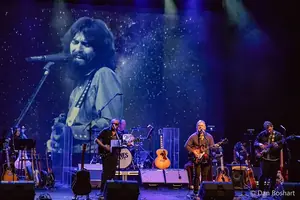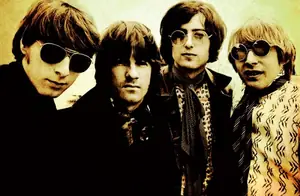

Walking into a rehearsal space in Windsor feels like stepping into a humid time capsule, especially when the air is thick with the specific, metallic scent of vintage tube amplifiers heating up. This is the home turf of British Beat 66, a quintet that has been mining the rich, jagged seams of the 1960s since they formed in 2004. They aren't just another tribute act playing the hits for a free beer tab; they are a concentrated effort to bottle the lightning that struck the music industry when four lads from Liverpool first landed at JFK.
The lineup reads like a roster of local heavyweights: Michael Hereford (stage name Michael Chester), John Labadie (Johnny Bo), Dino Urbano (Derek Domino), Lawrence Culnan (Larry C) and Matthew Damm (Matthew David). They handle the canon of The Rolling Stones, The Beatles and Herman’s Hermits with a level of reverence that borders on the religious. But they also have a sense of humour that is decidedly un-pious.
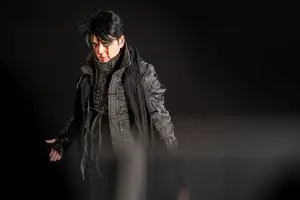
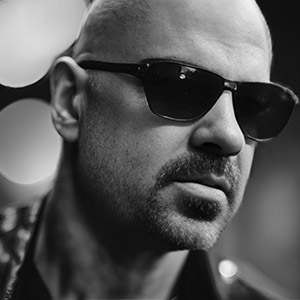
In a move that is either brilliant marketing or a terrifying lapse in judgment, the band was so eager for coverage that they offered to pose nude for a conceptual feature. The idea involves a print edition where readers can use a pencil eraser to literally "undress" the band members. It is the kind of gritty, low-rent charm that defines the local scene. Grab a copy and get your erasers ready, because these guys are leaving nothing to the imagination.
We sat down with the band to figure out what makes a group of grown men dedicate two decades to the sounds of 1966. The origins of the group are rooted in the kind of long-term loyalty you rarely see in the fickle world of rock and roll.
Michael Hereford explains the recruitment process: "I went to high school with John and we have performed together off and on since then. I have known Larry for years and have played with him in different projects over the years. I met Dino when he assisted with one of our early shows and I met Matthew recently through mutual musical friends."
That kind of history matters. You can hear it in the way the bass locks in with the kick drum. It isn't just about knowing the notes; it is about knowing when the guy next to you is going to lean into a solo or pull back for a vocal harmony.
The choice of the era wasn't a calculated business move based on demographics. It was an emotional necessity. For Hereford, the British Invasion isn't a genre; it is his DNA.
"It is the music I love and grew up with," Michael says. "I identify with the sights and sounds of that era. I love all music and I perform and listen to a wide variety; however, this is the music I enjoy the most."
Larry Culnan echoes this sentiment, framing the era as the Big Bang of modern creativity. He sees the band’s work as a way to pay back the debt he owes to those early influences.
"Growing up in that era was amazing," Larry says. "Starting with early North American Rock and Roll and then entering into the British invasion. It was a creative time and that’s what started me with being a musician. Now I get to play the influences of that era."
But don't call them a "clone" band. There is a fine line between a tribute and a caricature. British Beat 66 walks that line by focusing on the visceral energy of the performance rather than trying to replicate every single pop and hiss of a scratched 45 rpm record.
Michael is clear on the band’s philosophy: "We attempt to capture the spirit and feeling of this music. We enjoy putting our own spin on the tunes."
And that spin is exactly what keeps the dance floors at local legion halls and casino lounges packed. There is a certain kinetic energy in 60s pop that modern music often lacks. It is built for participation.
"It’s fun energetic music," Michael says. "Our audience loves to dance and at times sing along with us at our shows."
That was such a privilege for Windsor to have a legend like that in town. He was such a down to earth guy too.
When pushed to define their specific sonic identity, Hereford struggles to pin it down to a single source. They are a Frankenstein’s monster of the best parts of the decade, blending the grittiness of London’s blues scene with the polished harmonies of the Merseybeat sound.
"That’s a tough one," Michael admits. "If anything, I would say a combination of several 60s British Invasion bands, most particularly The Rolling Stones, The Who and The Beatles. Our own personalities come through when we are performing."
The pedigree of the band members is bolstered by their own experiences as fans. They didn't just study these bands on YouTube; they were in the crowds, absorbing the volume and the spectacle firsthand.
"The British Invasion bands? I never saw The Beatles, however I have seen Ringo Starr and Paul McCartney in concert," Michael says. "I have seen the Rolling Stones twice, Herman’s Hermits (with whom I did a show before there was British Beat 66) and I also saw The Zombies, The Yardbirds, Steve Winwood (Spencer Davis Group)."
Larry’s list of attended gigs reads like a Rock and Roll Hall of Fame induction ceremony. He was there when the legends were still earning their stripes.
"The Rolling Stones, Rod Stewart and the Small Faces, Procol Harum, Pink Floyd," Larry lists off.
This proximity to greatness reached a fever pitch when the band actually shared the stage with Jim McCarty, the drummer for The Yardbirds. For a group that lives and breathes the 60s, this wasn't just a gig; it was a validation of their entire existence. The Yardbirds were the launching pad for Eric Clapton, Jeff Beck and Jimmy Page. Playing with McCarty meant playing with a man who had seen the gears of history turning from behind a drum kit.
"When I first heard about it I was almost worried to say anything in case it didn’t happen," Michael says. "I’m sure glad it happened. Jim has performed with Eric Clapton, Jeff Beck and Jimmy Page for a large part of his career, so I knew we needed to give the Yardbirds tunes proper justice. Jim is such an amazing drummer. He showcases some very creative beats and drum breaks in those Yardbirds tunes."
Larry views that collaboration as a landmark moment for the city of Windsor itself. It was a rare instance where the local scene was elevated by the presence of a true architect of the genre.
"Yes, they were," Larry says, referring to the legendary status of McCarty's cohorts. "Such a list of great guitarists came through the band. They were part of the era that brought you the information and opinions of what was going on in the world at that time. That was such a privilege for Windsor to have a legend like that in town. He was such a down to earth guy too."
But the Windsor music scene is a complicated beast. It is a city with immense talent but a shrinking number of places to actually showcase it. The band has a front-row seat to the slow erosion of the traditional "bar band" circuit.
Michael remains optimistic, particularly about the new blood entering the fray. "The Windsor scene is full of talented performers and some pretty cool venues and owners. I am excited to see some of the younger bands and performers starting to make inroads and seeing success."
Matthew Damm sees the local community as a protective enclave where musicians look out for their own. In a world that is increasingly digital and disconnected, the Windsor scene remains tactile and supportive.
"One thing I can say about the Windsor music scene is the incredible support the musician gives to each other," Matthew says. "They are known to inspire, encourage, and help each other out far above the call. Windsor is a true great experience to be a professional musician in."
However, no scene is perfect. The logistics of being a working musician in a border town have changed drastically over the last few decades. The days of 500-seat rooms being packed every Tuesday night are gone, replaced by smaller venues and a crowd that has different priorities.
Michael identifies a specific logistical hurdle that bothers him: the lack of a centralized hub for show listings. "It’s good to see many of the venues have local entertainment starting earlier in the evening. I enjoy diversity in music that often corresponds to my mood, so I would like to see meaningful work for all styles of music. I miss having a listing of who is playing where. Now it’s a matter of checking each venue’s listing."
Larry is more blunt about the structural issues facing the city. He sees the decline of the "room" as the biggest threat to the culture.
"Yes, more venues and a variety of music to be witnessed live," Larry says. "More support for the different bands who are putting their own music out. There is definitely a lot of great talent here. The problem we have is the shrinking live venues. Rooms are smaller and crowds are different from 30 and 40 years ago. So, with the help of Facebook and local papers like yours, it helps to give the area an idea of the entertainment available and where you can see them live."
Despite the challenges, British Beat 66 has managed to secure some high-profile real estate. They have become a staple at Caesars Windsor, a venue that demands a level of professionalism that many local acts can't muster.
When asked about the highlights of their run, Michael and Larry provide a joint list of milestones that have taken them far beyond the city limits.
"British Beat 66 has had several memorable appearances at Caesars Windsor," they say. "Our performance at the Grand Prix on Belle Isle courtesy of Motor City Casino was another highlight. Our trip to Montebello, Quebec where we were treated wonderfully by our host was another. Also, Put-in-Bay Ohio, Caribbean Blue & Friends III were special to us. I am truly blessed with the people I have met in the music world and the wonderful venues where I had the privilege of performing."
And while they have made their name on the backs of the giants who came before them, the band isn't content to just be a museum piece. They are currently pivoting toward original compositions that capture the aesthetic of the 60s without being direct covers. It is a risky move for a tribute act, but one that feels earned.
"British Beat 66 has been working on some original material including 'Mop Top Madness' and 'A Minute or Two' which will become part of our show in 2019," Michael says.
Watching them tear through a set on a humid night on Sept. 14, it is clear that British Beat 66 isn't just playing for the paycheck. They are playing for the ghost of 1966, trying to keep a specific kind of magic alive in a city that desperately needs it. Whether they are wearing suits or, as threatened, nothing at all, they remain Windsor’s primary link to the British Invasion.