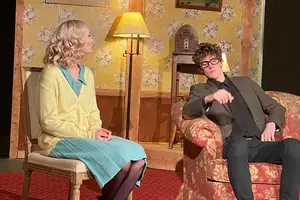

The air inside Sho Studios is thick with the scent of old wood and the nervous energy of a debut season. It is the kind of space where you expect to find something raw, but Bloomsbury House is aiming for something notoriously polished. They are mounting Agatha Christie’s *The Mousetrap* from Feb. 13 to 23, a move that is either incredibly brave or delightfully insane for a new company.
But this is not just another community theatre retread. Directors Martin Ouellette and Carly Morrison-Hart are leaning into the camp and the carnage. The script is a legendary piece of clockwork, trapping seven strangers at Monkswell Manor while a blizzard rages outside. And then the police sergeant shows up.
The stakes are high because the play itself is a monolith. It has been running for over 60 years in London. It is the ultimate "whodunnit" with a twist ending that has become a sacred secret in the theatre world.
When asked why they chose to tackle such a behemoth for their debut, Carly Morrison-Hart explains the logic of the ensemble. Morrison-Hart says, "We wanted something classic that we could mess with and make new in some ways. *Mousetrap*, having such success in England, was an easy choice. We also have a lot of small cast plays this season, and wanted the challenge of a bigger ensemble."
And there is a specific aesthetic at play here. This is not just a dry drawing-room mystery. Martin Ouellette is looking to the British tradition of the panto to inject some life into the old bones of the manor.
Ouellette says, "We wanted to have one show this season that could give our audiences the same sort of experience a holiday panto gives to kids, and each guest that arrives at Monkswell Manor is stranger than the previous one while the heightened stakes and twisting plot lend the script an over-the-top quality that suits the comic panto style."
But does *The Mousetrap* still work in 2024? The play has a weird gravitational pull. It has outlasted empires and art movements. Morrison-Hart attributes this to Christie’s surgical precision with the pen.
Morrison-Hart says, "Agatha Christie wrote with pitch perfection, and people feel it when they see the play. It surrounds you, and you are all of a sudden part of the plot, distrusting everyone who graces the stage. Something about a good murder plot makes people happy…creepy and wonderful, isn’t it?"
Ouellette sees it through a more sociopolitical lens. He recognizes that beneath the murders, there is a biting commentary on the British hierarchy that still feels relevant in a modern economy.
Ouellette says, "It’s a clever horror tale and very funny script that hits on some classic themes of English class war that still resonate today. The way the show is constructed makes it easy for busy actors to rotate into the production for a few weeks and show off their comedy chops."
Then there is the secret. At the end of every performance, the audience is sworn to silence. In an age of TikTok spoilers and instant gratification, keeping a 70-year-old secret feels like a radical act of community.
Morrison-Hart believes the audience wants to be "in" on it. She says, "The play is widely known about, and it’s part of the fun to keep the secret going. I believe our audiences will be thrilled to be a part of the magic."
Agatha Christie wrote with pitch perfection, and people feel it when they see the play. It surrounds you, and you are all of a sudden part of the plot, distrusting everyone who graces the stage. Something about a good murder plot makes people happy…creepy and wonderful, isn’t it?
Ouellette is equally confident in the audience's ability to keep their mouths shut. He says, "It’s definitely a long-running tradition to keep the ending a secret, and I think in our spoiler-hating culture we’ll have no problem keeping that going."
But why has this never been a massive Hollywood blockbuster? If you look at the success of *Knives Out*, the appetite is clearly there. The answer lies in a legendary, iron-clad contract that has kept the play tethered to the stage.
Morrison-Hart notes the legal barriers. She says, "I do believe that it is not legally allowed to become a movie until the play has stopped for a certain amount of years. I think, like your last question, it is about keeping the secret."
Ouellette is more specific about the West End stranglehold. He says, "By contract, a movie can’t go into preproduction until the West End version closes, and it’s still going strong."
Directing a mystery is a technical nightmare. You have to hide the truth in plain sight without being obvious. It requires a specific kind of devious mind. Interestingly, neither director has walked this specific path before, though they have "considered murder" in a metaphorical sense.
Morrison-Hart admits they have a secret weapon in the wings. She says, "We’ve both considered murder before on other productions, but neither of us have taken on the task of directing a murder mystery. Martin’s mom is a super sleuth, and is our secret weapon when it came to details. Since we are putting on our own Bloomsbury twist on the play, we’re very excited about the whole thing."
Ouellette leans on his background in high-energy performance to bridge the gap. He says, "I’ve directed horror and comedy as well as Gilbert & Sullivan, and helped out on and performed in a few Korda pantos, so I feel well-prepared."
The most shocking revelation is that neither director has actually seen a live production of the play they are currently helming. They are working from the text up, unburdened by the weight of previous interpretations.
Morrison-Hart says, "No, it has only been playing in our heads for 6 months straight, but alas we have not been able to see a production, though I think another local company produced it quite a number of years ago. Our cast has been bringing the script alive every rehearsal."
Ouellette’s connection is more nostalgic, rooted in the grainy broadcasts of British television. He says, "I have not seen the show either, but grew up on the dryly comic British mysteries my mother watches on PBS, including Agatha Christie’s *Poirot*, so her writing style holds a special place for me."
But there is a risk here. By "messing" with a classic, you risk alienating the purists. How do you balance the expectations of a Christie fanatic with a modern audience that wants speed and spectacle?
Morrison-Hart is playing her cards close to her chest. She says, "In the spirit of not giving secrets away, we have to be careful answering this one. Let’s just say, we have approached it with open, broad minds, making big choices for the characters, and how they interact with one another, as well as the audience."
Ouellette promises a pace that defies the typical "drawing-room" boredom. He says, "I think our experience with mixing horror and comedy, as well as helping coax fearless performances out of young actors, will result in a much higher-energy, faster-moving experience than you’d expect from a classic drawing-room mystery."
The enduring power of Agatha Christie cannot be overstated. She was a woman who understood the darkness of the human heart better than almost anyone in the 20th century. Morrison-Hart finds inspiration in Christie’s own enigmatic life.
Morrison-Hart says, "As a youth, I went through a few years of murder mystery, and Christie was that author that launched me into so many other universes. She is adept at keeping you wondering, getting you almost frustrated that you can’t find the truth. I also love her personal myth, once disappearing for two weeks and never fully explaining herself when she finally got home. The lady was brilliant, and it shows through her works, and the love they have accumulated all these years later."
Ouellette finds his appreciation in the sharp edges of her dialogue. He says, "I mentioned the connection to my childhood memories in front of the TV, but as an adult I’ve come to appreciate just how funny and cutting she was, especially when dissecting certain snooty ideas about aristocracy and moral superiority."
And then there is the cast. Bloomsbury is betting on young talent to carry this heavy lifting. They have pulled from local programs like WCCA and the University of Windsor to fill the manor.
Morrison-Hart breaks down the roster. She says, "One of the choices we made, when choosing this play, was to use a younger, very talented cast. Our ingénue couple Aidan Robertson and Tatum Roy are classmates from Windsor’s WCCA program, while Matt Alexander and Jennifer Desaulniers are students at the University of Windsor who blew us away as the villains in Korda’s panto this past December."
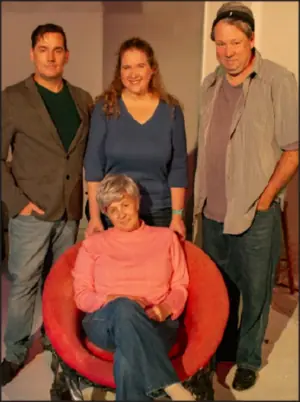
Ouellette rounds out the team, including a self-aware nod to his own role on stage. He says, "Alexandra Hagen, Emily Jones, and Callum Keane fill out the cast, and Autumn Tousignant stage manages, while yours truly crashes through a few scenes as perhaps the weirdest weirdo in the pack."
Whether the "weirdo" approach works for a classic Christie remains to be seen. But in the cramped, intimate confines of Sho Studios, there is nowhere for a killer—or an actor—to hide. If they can pull off the tension while maintaining the "panto" energy, Bloomsbury House might just have the hit they need to anchor their debut season. Just don't expect anyone to tell you who did it.
Get Tickets