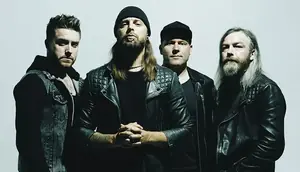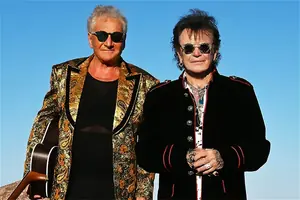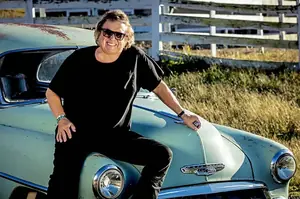

Richard Williams is calling from Salina, Kansas. It is a fitting, almost poetic location for the man who has spent nearly half a century anchoring the guitar work for one of the most complex machines in the American rock canon. He sounds relaxed, but there is a sharp, blue-collar edge to his voice that reminds you Kansas was never a "California" band, despite the arena-sized success. They were always the outsiders from Topeka who brought a European progressive sensibility to the American heartland.
Williams, famously recognizable by his eye patch and silver mane, remains a foundational pillar of a lineup that has seen its share of revolving doors. The current iteration is a powerhouse of technical proficiency, featuring original drummer Phil Ehart, bassist and vocalist Billy Greer, keyboardist Tom Brislin, vocalist Ronnie Platt, violinist David Ragsdale, guitarist Zak Rizvi and original guitarist Richard Williams. They are heading toward a May 5 date at Caesars Windsor, a venue that demands a certain level of polished spectacle.
But being back in Salina triggers something deeper than just another tour stop. It is a collision of the past and the present for a man who helped define the AOR (Album Oriented Rock) era. The geography matters here.
"I don’t know if it’s wilder, that’s yet to be seen," Williams says regarding the energy of playing his namesake state. "These are my people and coming back here to play is always something special for all the obvious reasons. Playing in this state is like a homecoming for me. I’ve been based out of Atlanta, Georgia for most of the time since the later 70s, but I still have friends here and I still come back whenever I can. My North Star is always here and my compass always leads me back here no matter where I live. Kansas will always be home."
The band is currently navigating a strange, lucrative loop of nostalgia. We are living in the era of the "anniversary tour," a business model that Kansas has mastered with more integrity than most. This year marks the 45th anniversary of their self-titled debut, the 40th for *Monolith* and a continued celebration of the 40th anniversary of *Point of Know Return*. It is a lot of history to carry, but the market is biting.
"That’s the truth," Williams admits. "These last five years have been with another building process for us. It’s been going better than the last 20 or 30 years. It’s been a lot of fun to be in this band playing a lot of material we haven’t played in a very long time."
And the numbers back him up. While many of their peers have retreated to the county fair circuit, Kansas has seen a genuine resurgence in theatre-sized ticket sales. The fans are not just looking for "Dust in the Wind" anymore; they want the deep-cut prog-rock epics that require a degree in music theory to follow.
"The Leftoverture 40th anniversary tour went so much better than anticipated," Williams explains. "We planned on doing 15 shows, but we did over 80 for that particular show. That is why we’re doing the Point Of Know Return 40th anniversary show. It started last year but is going through this year and it’s also going into next year. It’s just been booked a lot, but that’s not the only thing - we’re also doing just regular 90-minute shows too, which is what we’ll be doing up there."
But do not mistake them for a legacy act content to just polish the trophies. There is a creative restlessness that keeps the band from becoming a museum piece. They are actively adding to the catalogue, ensuring they have something fresh to offer between the classics.
"It’s a really good time to be in Kansas with a lot going on," Williams says. "We’re working on a new album to be released next year. We’re going to be recording that throughout the summer this year."
Looking back at the height of their commercial powers can be disorienting. There was a moment nearly 40 years ago when the band sold out Madison Square Garden, a feat that usually signals a band has reached the apex of the industry. At the time, however, the gravity of the achievement did not quite register with the boys from Topeka.
"Well you would think, but we were on a progression," Williams says with a shrug in his voice. "We’re opening for certain bands and then we finally broke the door down for our first album. The shows were gradually getting better and finally we were at the Garden. Our manager at the time, Budd Carr, was in the limousine on the way to the show and he was just beside himself. 'I can’t believe Madison Square Garden sold-out, this is incredible,' we were like 'whatever, anybody want to go do something to eat when we’re done.'"
That nonchalance is a classic Kansas trait. There was a lack of ego that likely saved them from the typical rock and roll implosions of the era. They were working-class musicians who happened to find themselves in the world's most famous arena.
These are my people and coming back here to play is always something special for all the obvious reasons. Playing in this state is like a homecoming for me... My North Star is always here and my compass always leads me back here no matter where I live. Kansas will always be home.
"We were a bit naive when we were young," Williams reflects. "We were just so caught up in it that we didn’t really realize the milestones that we were crossing at the time - to look back on this, yeah, that’s really amazing. But we were a bit too green and immature to appreciate it at the time. Now, with 45 years on the road with this band, I can appreciate that moment very easily, but back then we were green and didn’t know who we were really as individuals."
The recording of that first album 45 years ago was a different beast entirely. It was a baptism by fire in the New York City studio system, a world away from the rehearsal spaces of the Midwest. The technical constraints were tight and the pressure from the suits was constant.
"Not so much in the recording of it," Williams says when asked about his memories of those sessions. "In the studio it was always rush, rush, rush. We didn’t have a lot of time to record it, mix it and be done with it because everything was pushed along. We didn’t even use our own equipment. Oh, no, you never use those kinds of amps in the studio they told us. We didn’t know, so we kind of got pushed around a bit by the engineers and production team. But still it was all very exciting. We learned a lot after that."
Despite the "rush, rush, rush" nature of the production, the environment at the Record Plant was legendary. It was a revolving door of rock royalty, providing a surreal education for a band just starting their professional lives.
"As for the recording process, at that time we’ve never done that before, so we just didn’t know, but the atmosphere around the studio was some of the most memorable, because of all the other people that were there," Williams says. "John Lennon had just been in the studio; B.J. Thomas was in one of the studios while we’re working there. There was a common area where you sit around where everybody would hang out. Rick Derringer was in there, he was producing a Johnny Winter album, and we talked with him and some of the guys from his band. The Alice Cooper guys were hanging around there and so you had this organic roundtable of these guys telling their experiences and we were brand new to all of this, so it was a great education."
But the glamour ended at the studio door. The New York City of the mid-70s was a gritty, dangerous landscape, particularly around the 42nd Street area where the band was staying. It was a culture shock that would have broken lesser men.
"I remember that part of it a lot and I remember 'the walk' from the studio back to our hotel," Williams says. "This is in New York City and that terrible time on 42nd Street where it was all drugs, hookers and X-rated movie theatres. It was a terrible area at that time and we had to walk from the studio through that. Coming from Topeka, Kansas, to that, was two different worlds. But you’re young and invincible."
That sense of invincibility has matured into a steady, professional resolve. Williams still sees the same kid in the mirror who just wanted to play in a band, even if the "wide-eyed wonder" has been replaced by the reality of the industry.
"There are some similarities sure," he says. "I remember why I started doing this and that feeling is all still there. That feeling of wanting to be in a band and wanting to be with a bunch of guys that want to create things will always be there. I still love to go out on the road and perform."
He is remarkably candid about the toll the road takes and how it changes your perspective on the world. You cannot see the "circus" the same way once you have lived in the trailers and seen the machinery behind the magic.
"Long before I even had an instrument, I came to the understanding that I wanted to do something just like this," Williams explains. "It was very natural for me to do. This is just what I was made for - to be in a band with friends and make music. The wide-eyed wonder of it all is not there anymore after you’ve seen what’s behind the curtain enough times. You can’t look at the stage with the same wonder. I mean the first time you went to the circus as a little boy was something, but once you’ve been travelling with the circus for 30 years and working backstage shovelling elephant shit all day, you have a different perspective."
This life has rendered him unfit for "civilian" society. There is a specific isolation that comes with being a lifelong touring musician. You speak a different language, one that only those who have lived on a bus for decades can truly understand.
"For me, I can’t ever be a civilian again; this is the only life I know," Williams says. "I enlisted into this life a long time ago and to go to a party with a bunch of people is so strange to me, because conversations are different and I don’t like talking about me. I guess it’s fascinating for them because life can become humdrum, but it’s not for me. I know people want to know everything, but I get tired of talking about it."
He draws a fascinating parallel between the brotherhood of musicians and the support systems found in recovery groups. It is about a shared experience that defies explanation to outsiders.
"That’s why other musicians really connect with each other because we all have the same story, it’s the same but different," Williams says. "It’s like with Alcoholics Anonymous you can go in there and everyone has the same story with a different twist and you get to have a good laugh about it. Being a musician in a band is very similar."
The origin of Kansas was not a lightning strike, but a slow burn in the garage band scene of Topeka. The British Invasion hit the Midwest hard, turning every teenager with a guitar into a potential rock star. Williams was part of a constant reshuffling of local talent.
"I don’t really think so," Williams says when asked if that first album felt like a lifetime of work. "Topeka, Kansas was not a big town, but everybody I knew played an instrument because of the British Invasion. When that happened, there suddenly was a garage band on every block and everybody wanted to be in a band, so that was kind of normal. I’ve played in other bands with Dave Hope, the original bass player for Kansas. The first band I was ever in was with Phil Ehart, who is still our drummer today."
It was a survival of the fittest. The "weaning process" separated those who wanted the steady cheque of a Holiday Inn residency from those who wanted to conquer the world. Kansas was the result of those who were willing to suffer for the art.
"For six months you would be in this band and then some of the same people would be in it and you would get some new guys and then some of these new guys would get with others," Williams says. "It was a constant evolution of people going in and out of different but similar bands. But as we got a little bit older, there’s kind of a weaning process where some people they were pretty good at what they did, but they really didn’t want to travel, so they liked that Holiday Inn gig on the weekends – that wasn’t for us."
The big break came from a literal fluke. Don Kirshner, the man who shaped the sound of the 70s, famously discovered the band because he failed to flip over a demo tape. It is the kind of industry lore that sounds too good to be true, but Williams confirms the absurdity of their discovery.
"By the time this bunch of guys got together, some of us had played in bands together, but the writing of that first album really occurred in a brief period before we recorded it," Williams says. "It wasn’t like we’d written for 20 years and finally got an offer. Before Kerry Livgren was in the band, we had recorded six songs on a tape and sent it to different record companies. One of them landed on Don Kirshner’s desk, and he only heard one side of it - he never knew there was two sides to those reel to reel tapes, so because of that one song we wound up with the record deal. Then Kerry Livgren joined and we had a lot more material. Most of the stuff was pretty fresh, but you’re on the road touring, then they want another record and then another and it became quite the grind of touring, writing and recording. Every year something new would come out."
As the band prepares for their Windsor show, Williams looks at the current trend of "farewell tours" with a healthy dose of cynicism. He sees the "retirement" of his peers as little more than a marketing tactic, a way to squeeze the last few drops of revenue out of a waning fan base.
"We’re not finished yet and you know how farewell tours go; just ask the Eagles," Williams says with a sharp laugh. "How many farewell tours have The Who had? It started back in the 80s. I don’t put a lot of stock in farewell tours. It seems like a ploy to just raise the ticket prices. Give it about three years and if they don’t reappear, it might have been the farewell tour."
Kansas remains a band of the road, a group of musicians who have survived the shifting tides of the industry by simply outworking everyone else. They are not looking for the exit. They are looking for the next studio and the next stage. For Richard Williams, the North Star is still shining, and it is pointing directly at the next gig.