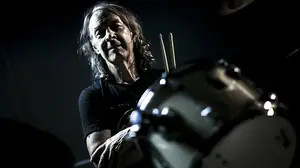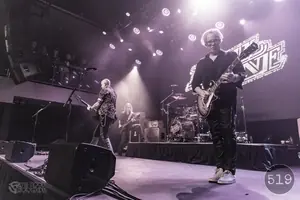

Windsor is a town that eats its young, at least when it comes to the music business. You either grind until you're grey or you vanish into the suburban ether. Rob Balint chose the grind. He has been a fixture in the local scene for over four decades, a timeline that stretches from the grit of Windsor’s The Hitmen to his current residency with The 519 Band.
But staying relevant for 40 years requires more than just knowing a few chords. It requires a level of survivalist intuition. Balint has watched the local community evolve, dissolve and occasionally reinvent itself. He knows the friction of being a working musician and the specific brand of exhaustion that comes with developing a craft in a city that does not always give back.
The last year and a half was a forced hibernation that broke a lot of artists. It was a period of soul searching and uncomfortable introspection. For Balint, it was not a time to sit on the couch and wait for the world to restart. He saw an opening.
This is not just another story about a guy opening a studio. This is a COVID-19 derailed story. It began with a mission that had nothing to do with personal gain and everything to do with the bureaucratic and emotional heart of the local industry.
“I’m in the American Federation of Musicians local 566 and I’m one of the elected directors,” Balint says. “Prior to COVID-19 we were trying to plan a fundraiser for The Mitch Lewis Music Educational Fund. Mitch was a beloved and well known Windsor musician who gave a lot to the Windsor music community.”
Mitch Lewis was the kind of figure who held the scene together with sheer will. When he passed, it left a vacuum. The fund established in his name was designed to ensure the next generation did not have to struggle quite as hard as the veterans did.
But the pandemic did not care about legacy. It shut down the venues, the union halls and the rehearsal spaces. For Balint, the loss of these physical spaces was a reminder of how much the landscape had already shifted since he was a teenager.
“This fund gives young musicians opportunities,” Balint explains. “Back in the day I was playing in bars when I was 16. I shouldn’t have been, but I was and that’s how it was back then, you had more places and opportunities to play.”
There is a certain irony in a veteran musician admitting he was underage in the bars. But that was the Wild West of the Windsor circuit. It was a trial by fire that modern kids simply do not get. Today, the barriers to entry are higher, the pay is lower and the venues are disappearing.
And then came the virus. It was the final blow to an already fragile ecosystem. The fundraiser Balint had been meticulously planning was wiped off the calendar.
“These days it seems much more difficult to play anywhere and then add COVID-19 to that,” he says. “We were going to have union bands like Leave those Kids Alone come and play this benefit to raise money for the fund. Then COVID-19 hit and all the plans were derailed. At that point I realized this could go on indefinitely and we weren’t working so I had this idea that I would put this studio together, partly for our band, The 519 Band but also as a way for me to give back to the music community and pay it forward.”
It is a bold move to build a studio when the industry is in a literal chokehold. But Balint has a history of showing up when the call comes. A couple of years before the world stopped, he found himself working the backline for one of the biggest names in rock history.
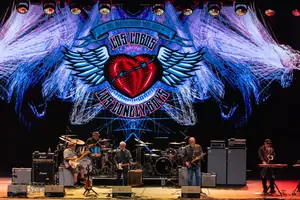
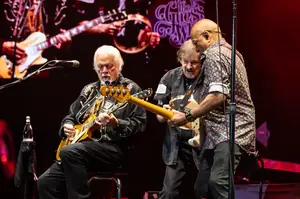
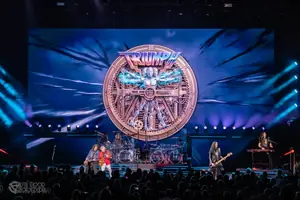
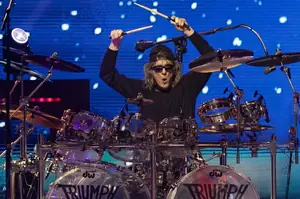
Sitting in the third row of the Colosseum at Caesars Windsor, you see the spectacle. Behind the curtain, you see the labour. Balint was there, moving the gear and ensuring the engines of stadium rock kept turning.
“Two years before COVID-19 I was looking for things to do and I got a call from Mike Lesperance at IEN (International Entertainment Network Inc.), who runs the Colosseum shows at Caesars Windsor and he said Ringo Starr is coming to town and we need a whole bunch of people,” Balint recalls. “He said, ‘You can do backline, you want to come?’ I said what the heck, I’ll give it a try, and I was there every show after that.”
That experience at Caesars Windsor was a crash course in high-level production. It gave him a perspective that most local players never see. It is one thing to play a pub; it is another to understand the technical requirements of a Beatle.
Balint realized that his value was no longer just in his fingers on a fretboard. It was in his head. He had the institutional knowledge that the "TikTok generation" of musicians lacked.
These days it seems much more difficult to play anywhere and then add COVID-19 to that... At that point I realized this could go on indefinitely and we weren’t working so I had this idea that I would put this studio together, partly for our band, The 519 Band but also as a way for me to give back to the music community and pay it forward.
“I have a lot of experience, insight, knowledge and I also have a lot of compassion and passion for music so what can I do?” he asks. “I can’t go generate money for the kids, but I can certainly bring them in here.”
"The Groove" is the result of that realization. It is a studio located in the heart of the region, but it is designed to function more like a laboratory. Balint is not looking to be a gatekeeper; he wants to be a facilitator.
The space is being built to mimic the reality of the stage. It is not a sterile, white-walled room where creativity goes to die. It is a lived-in environment.
“The idea is to bring a group of young people in here and let them see how a sound stage is set up,” Balint says. “We’ll be set up like a music venue and there will be vintage amps around that if they want to plug in to one and try it out, they can.”
There is a tactile necessity to this. In an era where most kids make music on a glass screen, the weight of a vintage tube amp and the smell of hot electronics is a revelation. Balint is focusing on the fundamentals that are often ignored in the digital rush.
He wants to teach the "how" and the "why" of the recording process. It is about the technicalities of the trade that used to be passed down through apprenticeship.
“If they’re writing songs, we’ll give them the opportunity to play that song and learn how tracking and pre and post-production works,” he explains. “Things as simple as how to properly wrap a cord, we’ll teach them these things. Even if it’s four hours a week for one group of individuals I’m going to donate my time for this. The only reason for my doing this is to give back to the community and let kids explore.”
But the studio is more than just a classroom. Balint is taking a hard line on the culture of the space. In a business that has historically been a boys' club rife with ego and exclusion, he is setting a different tone from day one.
His stance is direct. There is no room for the toxic nonsense that often poisons local scenes.
“This studio will be completely inclusive,” he says firmly. “Hate has no home here. I want everyone who comes here to feel comfortable and safe regardless of race, colour, creed or sexual orientation. Music is universal and everyone who enjoys music is a friend of mine. Can you imagine if the next Stevie Ray Vaughan came through here? Everyone has something to offer, everyone has a talent.”
The business model for The Groove is equally pragmatic. Balint knows that the local economy does not support $2,000-a-day studio fees. He is positioning himself as the essential middle ground—the place where you go to get your songs right before you spend the big money elsewhere.
He is even opening the doors to the competition. He wants other producers to use the space.
“We’ll also be renting the studio to budding producers who don’t have a studio to work in,” Balint notes. “I’ll have computers set up and everything wired so they can just plug in and go.”
Technically, Balint is making a choice that might raise eyebrows among the digital purists. He is avoiding the Pro Tools trap. While the industry standard has its merits, the cost of entry and the constant subscription-model headache is something he is bypassing.
It is a risky move in a world that demands compatibility, but Balint has found a workaround that keeps his overhead low and his clients' bills manageable.
“I’m never going to buy Pro Tools,” he admits. “I already found out that if I send my Tascam files to a Pro Tools guy, he can take them and scrub them and send them back to me and they’re great. The idea here is not spending three or four hundred thousand dollars down that rabbit hole, I can offer my clients an affordable option to work out their music.”
This is the "Information Gain" for the reader: Balint is betting on the "pre-production" market. He is not trying to be Abbey Road. He is trying to be the gym where you train before the title fight.
The gear list reflects this hybrid philosophy. It is a mix of reliable digital recording and the warmth of analog mixing.
“We have half a dozen Turbo monitors, a hybrid Tascam board, 24 track digital recorder and 24 channel analog mixer which is cool and we have a 24 channel Soundcraft as well,” Balint says. “I’m going to be offering a place for people to work out their music for a lot less than going into a high-end studio so that when they’re ready to go to that expensive studio, they’re prepped.”
The expansion of the space is already on the horizon. Balint is not stopping at audio. He understands that in the current market, if there is no video, the music does not exist.
He has a timeline, and he has the backing of some of the heaviest hitters in the Windsor production world. Paul Bonventre of Showtime Productions Inc. has been a key ally in this build-out.
“We plan on eventually doing video recording as well here and opening this space to the public,” Balint says. “I have a soft opening planned around Christmas time and come January the plan is to have it open to the public. Paul Bonventre from Showtime Productions Inc. has been a big help. A lot of the equipment I bought for this project I got through him and he’s very supportive of what I’m doing.”
The technical shift in the industry has actually benefited Balint’s mission. As the massive festivals move toward purely digital workflows, high-quality analog gear is hitting the secondary market.
Balint is scooping up the "obsolete" treasures that still sound better than any plug-in. It is a savvy way to build a world-class signal chain on a Windsor budget.
“The gear for the big festivals is all digital now so Paul has been selling us his analog gear that’s becoming obsolete for him but it’s still good equipment, especially for something like this,” Balint explains. “Chris Borshuk, the president of Windsor Federation of Musicians is also backing me on this project. 519 Band and I have a large network of followers on social media and we’re going to start with word of mouth and see where this goes.”
And that is where the story stands. Balint is not looking for a "revolutionary" shift in the industry. He is looking for a sustainable one.
The Groove studios will be opening officially in the new year. For those looking to bypass the high-end gatekeepers and actually learn the trade, Rob can be reached at rb@groovystudio.ca. You can also track the progress of the project and catch the latest from The 519 Band on Facebook.
In a city built on manufacturing, Balint is finally manufacturing the one thing Windsor needs most: a future for its musicians. But do not call it a comeback. He never actually left.