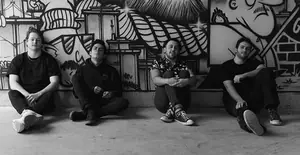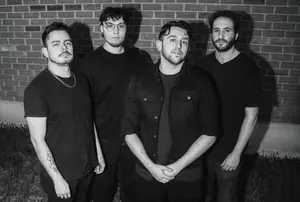
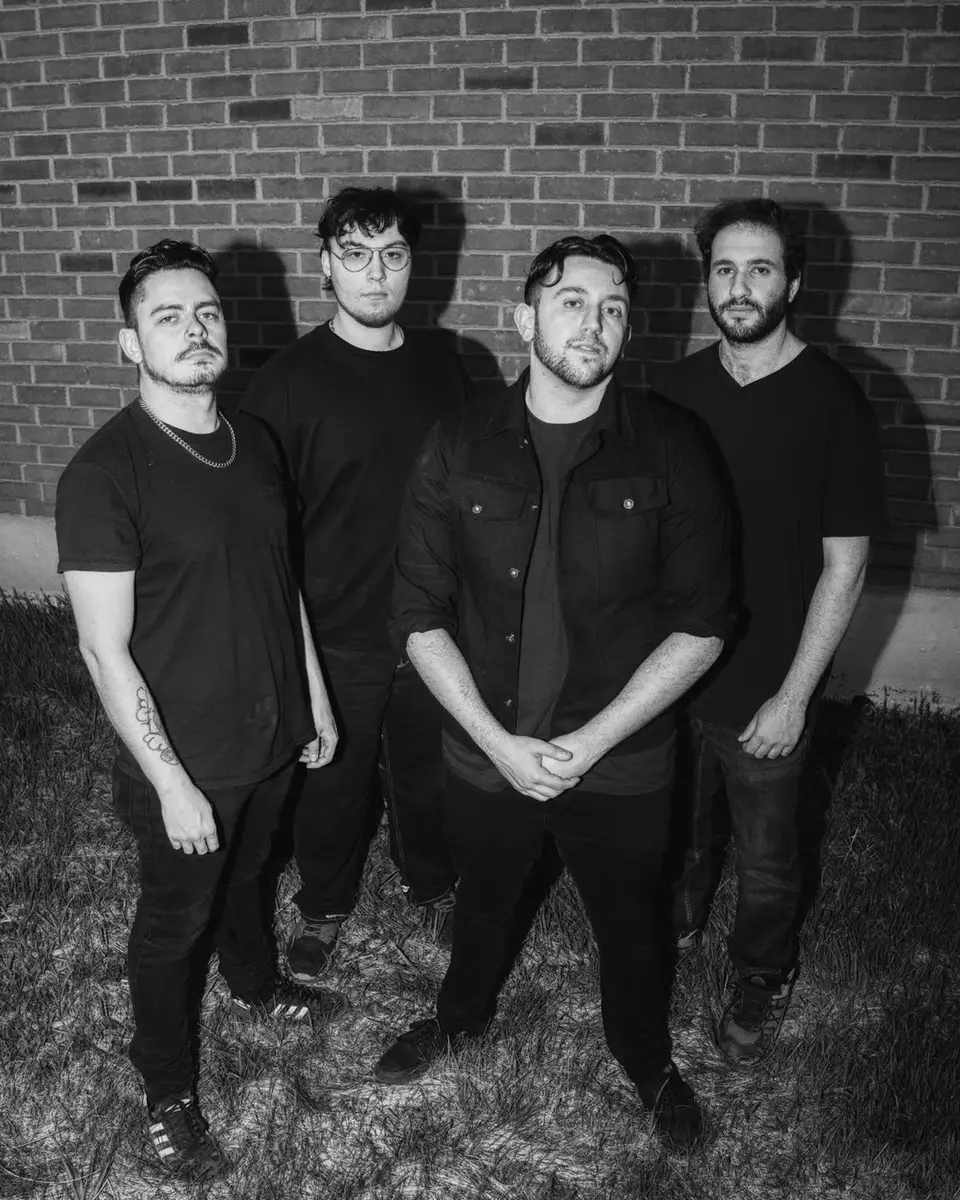
Toronto's Napoleon put out three EPs in a single calendar year. Vol. I landed, got added to eight playlists, charted on campus radio across the country and drew immediate comparisons to Underoath, Counterparts and Misery Signals — a lineage that takes most bands a decade to earn. Vol. II dropped May 29. Vol. III is still coming. And tonight, June 19, the band hits Palasad Social Bowl in London, Ont., kicking off a summer Ontario run with no real brakes and a new guitarist they haven't even fully broken in yet. Vocalist and guitarist Jon Elmaleh talked to 519 about all of it.
Start with the release strategy, because three EPs in one year isn't a stunt. It's a statement about how Napoleon operates. Elmaleh is direct about how it came together. "Last year we decided that we wanted to put out our debut record this year," he says. "As the time to record came closer we decided that as a newer band we wanted to try and do something a bit different, so we had this idea to divide it into three 'volumes,' each of which have a bit of a different sound to them." That last part is the important bit. These aren't three installments of the same record chopped up for release cycle strategy. They're three distinct sonic statements from a band that doesn't want to stay in one place long enough to be pinned down.
Vol. II earns that claim. Recorded and produced by former Cancer Bats guitarist Scott Middleton at his home studio, the EP pushes the band's low-end further than Vol. I did — drop-tuned guitars sitting heavy against Elmaleh's vocal performances, which have developed real range between screamed passages and cleaner melodic moments. The production balances urgency with clarity, which is harder to pull off in metalcore than most producers admit. Middleton has been with the band since 2020, and his ear for where Napoleon's chaos ends and its precision begins is audible in every mix.
The lead single "I Am Forgotten" is the sharpest thing on the EP and the most interesting creative choice on it. Where the rest of Vol. II pushes tempo and weight, "I Am Forgotten" pulls back into emo territory — a 2000s mid-tempo emotional gut-punch that lands somewhere between early Silverstein and Senses Fail's more controlled moments. The comparison to Silverstein isn't accidental. Shane Told guested on Napoleon's Enemy Within EP, and that association has followed the band since. Elmaleh takes it in stride. "People have been drawing the Silverstein comparison ever since that track came out," he says, and he seems more amused by the consistency of it than bothered.
"I Am Forgotten" also introduces new guitarist Justus Hajas, and his arrival wasn't a seamless plug-and-play transition. Hajas had ideas. The band listened. "The records got delayed a bit because Justus had some ideas that we wanted to explore, and we rewrote some of the songs to include his ideas," Elmaleh says. That's a significant detail. A lot of bands in this phase don't slow down to rewrite finished material for a new member. Napoleon did, and Vol. II sounds like a band with two guitarists who actually play together rather than one guitarist with a hired hand filling the other channel.
I don't really try to have reference points when I write music because I find if I do that I will end up just ripping off those artists and making worse versions of what already exists. With that being said, I am a huge fan of all of those bands, so the influence naturally bleeds in to my writing.
The Idobi Radio campaign for "I Am Forgotten" put the single in front of 1.5 million listeners before release date. That's serious reach for an independent Toronto band on their second EP of the year. Elmaleh acknowledges what that kind of institutional support actually does for a release. "I think that kind of early support adds legitimacy to the release, and as a result new fans are more likely to check it out because it is almost like an endorsement." That's not naive gratitude — it's an accurate read of how gatekeeping works in this scene. Idobi co-signing a single tells a specific audience that this is worth their time before they've heard a single note.
The Alternative Press co-sign from Shane Told — naming Napoleon one of 23 Canadian bands he knows will keep the scene alive — carries the same currency in different territory. Told is not a passive cheerleader. He's a working musician in the same Canadian heavy ecosystem who has been paying attention to what's coming up. When someone operating at that level puts a band's name in print, it reads differently than a blog blurb. Elmaleh knows this. "That type of co-sign adds legitimacy," he says. "It sort of tells people right away that this is something to pay attention to."
Napoleon formed in 2018 when Elmaleh was in grade 12. Only he and drummer Eitan remain from that original lineup, and Elmaleh is unsentimental about the distance between that version of the band and this one. "Even though the name Napoleon has stuck, I do not really consider it to be the same band," he says. Eight years of lineup shifts, a pandemic, genre evolution from hard rock through punk to post-hardcore to metalcore — the thread connecting 2018 to 2026 is Elmaleh's songwriting instinct and not much else. That's a reasonable position. The band that tracked Vol. II bears no resemblance to whatever was rehearsing in a high school in Toronto eight years ago.
His approach to influences is equally clear-eyed. Underoath, Counterparts, Misery Signals, Poison the Well, The Bled — the bands that Vol. I drew comparisons to are all acts Elmaleh genuinely listens to. But he doesn't use them as writing room blueprints. "I don't really try to have reference points when I write music because I find if I do that I will end up just ripping off those artists and making worse versions of what already exists," he says. "With that being said, I am a huge fan of all of those bands, so the influence naturally bleeds in to my writing." That's an honest and somewhat rare admission. Most artists either deny influences entirely or name-drop them so heavily it becomes a PR strategy. Elmaleh just explains how absorption works.
Middleton's dual role as both producer and manager is the structural oddity that nobody in Napoleon's press seems to fully examine. The producer-manager split is usually a conflict waiting to happen — the person making artistic decisions in the room has a financial stake in the outcomes those decisions produce. Elmaleh doesn't see it that way, and his reasoning is genuinely interesting. "Being the manager as well helps because there is a bigger picture he has in mind a lot of the time," he says. "Scott in many ways is the fifth member of Napoleon." That reframe — fifth member rather than service provider — says a lot about how this band actually functions. Middleton isn't optimising tracks for streaming metrics. He's building something alongside them.
The summer Ontario run is honest in scope. London tonight, Windsor tomorrow, Hamilton Sunday, then dates through July and August in Oshawa, Sudbury, Toronto, Ottawa, Belleville, Kitchener and St. Catharines. Ten dates across one province — not a national statement yet, just methodical ground-covering in a territory the band can actually work. Elmaleh doesn't oversell it. "We are already talking about going further out a bit later this year and early next year," he says. A full Canadian tour is the stated 2027 goal. For now, Palasad Social Bowl in London is the first real test of whether Vol. II translates to a live room.
And it should. The material is built for it. Elmaleh says he always writes with the stage in mind, trying to envision how songs will land before they're finished. "I always try to envision how the songs will go over live, and want to write songs that I know we will enjoy playing live," he says. That instinct — writing toward the room rather than the record — is what separates post-hardcore bands that stay interesting from the ones that peak on a recorded take and spend the rest of their career trying to recreate it. Napoleon are six shows into this touring cycle. The heavy stuff is just getting started.
The ceiling question is the right one to end on. Vol. II is heavier than anything Napoleon has put out. Vol. III is still coming. Elmaleh won't commit to a lid on how far that weight can go, and he's specific about why. "For me, it is important to always write music that I want to listen to," he says. "I would not want to force myself into a box where I can only write one or two types of things forever." A band that started in hard rock, ran through punk and post-hardcore, and landed in metalcore didn't get there by setting limits. Vol. III will tell us where the ceiling actually is. If the arc holds, it's somewhere above where anyone is expecting.