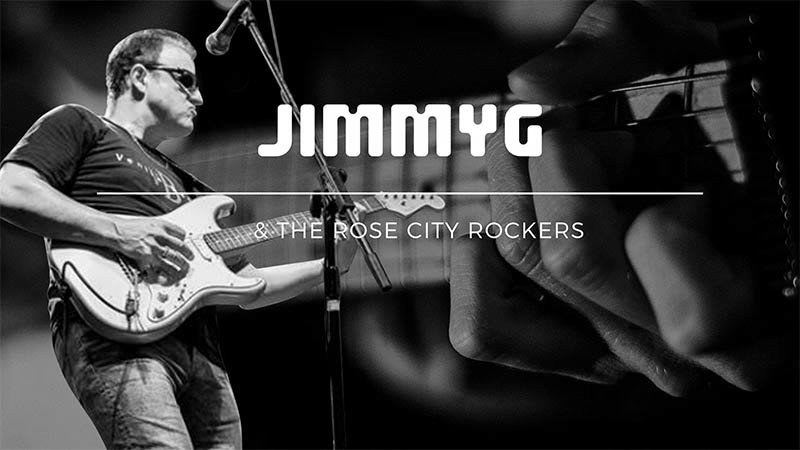
The music industry in a border town like Windsor is less of a ladder and more of a survivalist circuit. You either adapt or you vanish into the background noise of the local pub scene. Jimmy Graham chose the former. After decades of pivoting between the sweat-soaked stages of 80s rock clubs and the sterile environments of corporate hypnotism, Graham is returning to the source. He is currently putting the finishing touches on a blues-rock tribute project under the moniker Rose City Rockers, a record that feels less like a collection of covers and more like a reclamation of identity.
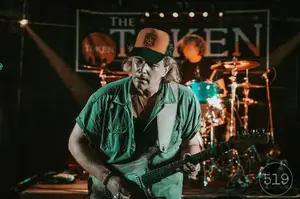
Watching Graham navigate his home studio is a lesson in veteran efficiency. He handles a guitar with the casual authority of someone who has spent more time on a tour bus than in a living room. This isn't a hobbyist’s mid-life crisis; it is a calculated return to the heavy, distorted roots that defined the classic rock era of the 1970s.
Graham’s resume reads like a frantic map of the Canadian entertainment landscape. He has seen the highs of national tours and the crushing silence of a global shutdown. When asked about his trajectory, he does not sugarcoat the hustle required to stay afloat in a shifting economy.
"I’ve been in the live entertainment business my entire life," Graham says. "It started off in touring bands back in the eighties and I toured all over Canada and into the Midwest in a band called Destiny and it’s just a long story, thirty years of being in the business. Music’s my passion, I’ve always played in bands, but if you want to make a living in the entertainment business, you have to have multiple streams of income. I went from playing in bands to becoming a karaoke host to starting my own DJ company, Party Mix Entertainment which I ran for ten or 15 years to becoming a professional stage hypnotist which I toured all over North America for the last ten years. My last show was Mar. 2 of 2020 because the virus wiped me out."
That wipeout was a common story in the early months of the pandemic. But for Graham, the cessation of his corporate hypnotist career created a vacuum that only high-gain amplifiers could fill. The transition from the "Party Mix" days to the "Rose City Rockers" era was born out of a forced stillness.
The upcoming album is technically his debut as a primary artist, despite a career spent behind the glass in the control room. During the 1990s, Graham was a fixture of the regional recording scene, actings as a midwife for other people’s creative visions while his own were kept on the periphery.
"Well technically yeah, it’s a first album," he admits. "I had a recording studio back in the nineties in which I produced a lot of bands, did a lot of albums that were not mine but I produced a lot of other people’s albums. With the record label, I released around five compilations that featured Windsor artists and each CD had 12 to 14 songs on it so that’s 13 or 14 bands a year that I helped promote. Later on, I did an album by My October, I signed them to the label and they went on to open for Theory of a Deadman and Marianas Trench."
But producing others is a different beast than stepping into the spotlight yourself. The impetus for this specific record came from a late-night moment of cinematic inspiration and a deep dive into the digital ether of curated playlists. Graham found himself reconnecting with the blues, the foundational language of every guitar player who grew up with a Marshall stack and a dream.
"It’s kind of funny how it started," Graham explains. "When I started being a corporate entertainer I was on the road for ten years. I still have a full studio in my house but my whole music career got mothballed due to the fact that the corporate thing was so successful and my trajectory went in a different way. Once everything got shut down with live entertainment in that respect and sitting around for six or seven months thinking now what do I do, I picked up my guitar and started playing. I have a subscription to Stingray Music and was listening to the Blues Channel and just picked up my guitar and started rocking out to these blues songs and I’ve always loved the blues, what guitar player doesn’t? I’m watching Netflix one night and see a documentary about ZZ Top, one of my all time favourite bands. In the closing credits they started playing Blue Jean Blues. Blue Jean Blues was the first blues song I had ever heard of when I first picked up a guitar and started playing as a teenager so I thought, I want to do a version of it."
The technical hurdles were the first to appear. A mothballed studio isn't just a room; it’s a museum of outdated software and dusty cables. Graham had to re-learn his own environment to capture the spark.
I’ve been in the live entertainment business my entire life. Music’s my passion, I’ve always played in bands, but if you want to make a living in the entertainment business, you have to have multiple streams of income.
"So it’s midnight and I run down to the studio and fire everything up and I’m looking at all this stuff thinking how does this stuff all work because it had been so long since I even used it," he says. "So I started fiddling around and got a drum beat and grabbed my bass and put a bass line in and then started riffing away on my guitar. By around three or four o’clock in the morning, I started thinking to myself, I think you’re on to something because I didn’t play the song as a strict cover of the original. Their version of the song is three or four minutes long and my version ended up being almost nine minutes because I kept coming up with these ideas. I finished it off and listened back to it but didn’t take it too seriously but then I grabbed another song."
The project quickly evolved from a midnight experiment into a full-scale reimagining of the canon. Graham wasn't interested in carbon copies. He wanted to find the "swamp" in the hits, the grit that often gets polished away by radio-friendly production.
"I think it might have been Miss You by the Rolling Stones which I used to play in a band called Picture This, but we always played it like The Stones," he recalls. "I always heard it as a swampy blues song so I started goofing around with that one and listened back and thought this is a cool idea too. For me it was just therapeutic but I played it for a few friends who really liked what I was doing."
The Rose City Rockers name itself predates the album, existing as a loose collective that Graham and collaborator Mike Hereford used for one-off gigs. It was a utilitarian title that eventually became the banner for this virtual recording project.
"Mike Hereford called me up just before St. Patrick’s Day in 2016 and said he had a gig and asked if I wanted to play," Graham says. "I said sure but we needed a band name so he and I came up with Rose City Rockers. I started thinking that it would be cool to have a band to go out and play maybe once a month but just rotate members, different drummers, different bass players, singers, etc. I had already started to put together a blues/rock band with Toni Rose and Alex Pagani under that name and then came the lock down. So I decided to bring various musicians in to record and create a virtual version of the band and eight songs later I have an album."
The tracklist for the album reads like a curriculum for a 70s rock education. It’s heavy on the influence of the British blues invasion and the raw American power trios that followed. Graham’s choices reflect a desire for energy over technical perfection—a rare sentiment in an era of Pro Tools-corrected performances.
"I was weaned on blues rock from the get go," Graham says. "The first music I bought were from bands like Steppenwolf, Leslie West, Humble Pie Rocking the Fillmore, all of those bands I loved because there was such raw energy and passion and who cares if there were little mistakes. So the album started with Blue Jean Blues which is opposite of what I just said but then it morphed into Miss You by The Stones, Crossroads by Robert Johnson/Eric Clapton, Roxy Roller by Sweeney Todd, Brown Sugar, Fool For Your Stockings, Bridge of Sighs, and I did a Montrose song, Good Rocking Tonight."
One of the more interesting diversions on the record is the treatment of "Good Rocking Tonight." While most modern listeners associate it with the hard rock swagger of Montrose or the early fire of Van Halen, Graham dug deeper into its DNA.
"I thought Good Rocking Tonight would sound cool with a big band twist to it so I recorded it and did a video and when I looked it up to do the songwriting credits I discovered that it was originally written in the late fifties as a big band song," he notes. "Van Halen, their first few albums were predicated on cover songs, right? Even though they had great originals their big hits were covers. I saw Buddy Guy on a bill with Jeff Beck a few years ago and here’s this 80 year old guy having the time of his life and I thought, that’s what I want to be. So that’s why this first album is nothing but cover songs, yet also putting my own spin on it. Bridge of Sighs is almost unrecognizable until about a minute and a half into the song."
The collaborative spirit of the Windsor scene is baked into the record's production. Graham reached out to local heavyweights to add texture, most notably keyboardist Kris Marentette. The inclusion of Marentette was the result of a happy accident during a live benefit show years prior.
"Yeah, I have four or five featured keyboard players on the album and the story with Kris who is a fabulous guy, fabulous musician, he was in version two of The Rose City Rockers," Graham explains. "We did a benefit and Fool for Your Stockings was in the set list. The song before my guitar went out of tune and so while I was tuning my guitar, instead of just standing there, Kris started playing the opening riff on his keyboard and I thought, that sounds great, keep doing that! So I told the band don’t play, just let Kris play and I sang over it and once it got to the second verse the rest of the band kicked in. Both Kris and I looked at each other and thought, what a cool version."
That version became a cornerstone of the recording sessions. Graham didn't stop with Marentette; he recruited a small army of ivory-ticklers to flesh out the arrangements, many of which lacked keys in their original incarnations.
"When I told Kris I wanted to do that version on the album he was happy to come in and record it," Graham says. "Other keys players on the album are Mike Jubenville on Miss You, Cliff McPherson of Greatest Hits Live plays on Bridge of Sighs, and Joe Trocchi who’s a stellar keyboard player, I thought he’s the guy for this album. I brought him in on Blue Jean Blues and Good Rocking Tonight which I can’t wait for everyone to hear, he just makes that song. Most of these songs didn’t have keyboard or piano on the original versions."
As the release date approaches, Graham is eyeing a mid-March window to unleash the project. In a city that has seen its share of musical peaks and valleys, Graham's return to the blues is a reminder that the best way to move forward is often to look back at what made you pick up the instrument in the first place.
"I’m hoping for it to be ready for release mid March," he says.
For a musician who has spent his life in the service of the audience's entertainment—whether through a DJ booth or a hypnotic trance—this record feels like a personal victory. It’s the sound of a veteran finally playing for himself. And if the rest of us get to listen in, all the better.