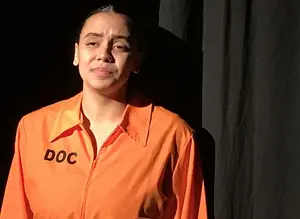
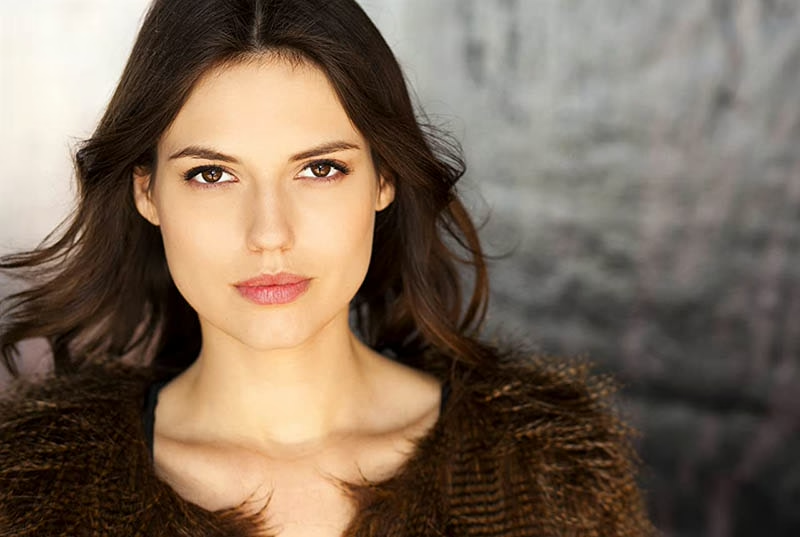
The indie film circuit is often a cluttered mess of vanity projects and half-baked scripts, but every so often, a performance cuts through the noise. I sat down with Kate Amundsen recently to discuss her heavy lifting in the new VOD release *Donna: Stronger Than Pretty*. It is a film that refuses to blink, tracing a harrowing line through 30 years of a woman’s life.
Amundsen carries the weight of the titular role with a grit that feels earned. She is not just playing a part; she is inhabiting a legacy. The film is a sprawling look at domesticity gone wrong, and Amundsen is quick to point out that the narrative is far more than a simple cautionary tale.
"The movie is called *Donna: Stronger Than Pretty* and I play Donna which was a lot of fun for me," she says. "It is about a young woman and her life over the span of three decades as she attempts to follow her dreams but instead gets in a relationship that turns abusive. It’s all about her finding her voice and making it through that and it’s a movie with a message, that’s what’s really important to us."
But the stakes are higher than your average indie drama because the source material is living history. Director Jaret Martino is not just telling a story; he is excavating his own family’s trauma.
Amundsen explains the gravity of the script. "The story is based on the director’s mother’s true story so it’s a very personal film for him," she says. That kind of proximity to the real-world subject can often be a minefield for an actor, but Amundsen seems to have navigated it by leaning into the history rather than shying away.
This project did not just appear out of thin air. It has been a slow burn, starting as a short film years ago. That gestation period is vital in the low-budget world. It allows for a shorthand between the lead and the director that you just do not get on a fast-tracked studio set.
"Yes, that was a few years ago, so this has been years in the making," Amundsen notes. "The great thing about it is it really gave us an opportunity to get to know each other and trust each other and get a good sense of the story we’re telling and how we want to tell it."
The production took a turn for the hyper-realistic when they decided to film in the actual locations where the history happened. There is an inherent ghostliness to that. Amundsen found herself living in the very rooms where the real Donna sought refuge.
"For the duration of filming the cast and crew stayed in her house and I stayed in her actual bedroom which was wild, she was staying with a friend at the time," Amundsen says. It is the kind of Method-adjacent immersion that can either break a performance or ground it in reality.
The house itself was a symbol of victory for the real Donna. "This was the house that she did end up buying for herself so it was super intimate and it gave me a whole new way into her world," Amundsen explains. "Even her dance studio which we filmed a scene in, all these places in Long Island which I had never been to before were so important for her and gave me this unique way to step into her life, even deeper than I had before."
And let’s talk about the look. Amundsen possesses a classic, almost cinematic face that feels like it was plucked straight from a late-sixties Technicolor reel. She fits the period perfectly, which is half the battle in a film that spans three decades.
"Thank you. I love the seventies vibe, I love period pieces in general so it really was a dream for me to play those decades," she says. But it was not just about looking the part. The fashion in this film acts as a psychological barometer for the character.
Amundsen’s background in modelling gave her a distinct advantage here. She understands how fabric and silhouette can dictate a character’s internal state. But even for a professional, the sheer volume of costume changes was a logistical nightmare.
"Oh yes, it was so much fun!" she says. "It was pretty daunting just because her clothing is an arc for her character, same with her makeup and hair, so there was a lot to keep track of."
She did not just show up and put on whatever was on the rack. She treated the wardrobe like a script. "I even had to make a journal and work with our costume designer because there was so many characters to cover; she did such an amazing job," Amundsen explains.
The evolution of Donna’s style is one of the more successful elements of the film. It tracks her descent and her eventual reclamation of self. "The clothes really reflect where she was psychologically and there is such a shift in where she portrays herself throughout the film and Donna in real life was this very fashionable woman with the big hair, the loud outfits," she says. "All those vintage photos are fun to look at, so it was definitely fun for me, I had a great time."
Her dad was actually an abusive alcoholic so I am familiar with abuse in that way just because my mom experienced it... I can see the damage it’s done to my mom and she’s still recovering from it. It takes years, it just does, so I think that’s why Jaret wanted to do that length of time, to cover those decades because that’s the length of time it took.
Research for the role went beyond just looking at old Polaroids. Amundsen had the rare—and heavy—opportunity to consult with the woman she was portraying. It is a double-edged sword for an actor. You want to be authentic, but you do not want to become a caricature.
"I would say both, I took what I could from her and I was able to read some of her journals from the time and that helped me get into her mind space more," Amundsen says. The journals provided a raw, unfiltered look at a woman in the middle of a crisis, something far more valuable than any script notes.
But there is a sadness hanging over the film’s release. The real Donna passed away recently, making the project a posthumous tribute. "Obviously speaking with her, seeing how enigmatic she is, we unfortunately lost her this past year which is really sad but when she was still here, you could just see how glowing she was even after going through all this trauma for such a long time and still come out the other end with this positive attitude towards life," Amundsen says.
It is that resilience that Amundsen tries to capture. The film could have easily been a misery-fest, but it strives for something more hopeful. "She was so fun to be around, so I think I tried to get that from her despite the pain and despite the trauma, she still was so admirable and inspiring," she says.
Amundsen is not just the face of the movie; she’s in the trenches as a producer. Working with Martino’s production company, Love Wins, the focus is clearly on social advocacy through art. It is a noble goal, though one that requires a lot of unpaid labour and emotional investment.
"Obviously women’s issues are very dear to him because he still feels the trauma," she says of Martino. "It doesn’t just go away, this is a part of his daily life so I would say my role as a producer was very fluid."
As a producer, she is the film’s biggest cheerleader, a role she takes seriously in an era where indie films struggle to find airtime. "I do what I can to promote the film, I do all these interviews and I love the message that we’re sending," she says. "I think a message of hope is one of the best messages we can send to the world and to support women and men who unfortunately also go through abusive relationships. I want to promote it as much as possible, I’m very proud of it."
Talking to Amundsen, you realize she grew up in a world that was the polar opposite of the one Donna inhabited. Her upbringing was progressive, even if it was rooted in a tradition that many associate with conservatism.
"I actually had a much different experience; my mom is an avid feminist," she tells me. "I grew up with very progressive parents and I actually grew up Mormon which is kind of ironic because they were progressive Mormons."
It is a fascinating contradiction. But for Amundsen’s mother, there was no conflict between faith and feminism. "I would ask my mom why she was so gung-ho about this and she would say, 'Jesus was a radical.' And that’s why she was drawn to it. We have a long history of Mormonism on both sides of my family and definitely my mom was taught to be self-reliant."
Even with that progressive shield, the shadow of abuse was present in her family tree. "Her dad was actually an abusive alcoholic so I am familiar with abuse in that way just because my mom experienced it," Amundsen says.
She is careful to distinguish her experience from her mother’s or Donna’s. "I haven’t personally experienced it. Thank God," she says. "I can see the damage it’s done to my mom and she’s still recovering from it. It takes years, it just does, so I think that’s why Jaret wanted to do that length of time, to cover those decades because that’s the length of time it took."
Amundsen’s entry into the industry was almost inevitable given her lineage, but she took the long way around. Her father, Michael Amundsen, is an editor and filmmaker, but Kate was initially hesitant to step in front of the lens as an actress.
"I think I wanted to be in the arts in general. I was always very artistic, performing at home with my friends singing, dancing; Judy Garland was my hero growing up," she says. But the jump from living room performances to Hollywood sets was a daunting one.
"When we moved to L.A. when I was thirteen or fourteen, I was new to L.A., I was shy and I was gung-ho on being a model," she says. "Acting really intimidated me because it’s really scary, it’s totally exposing yourself, you have to be vulnerable in this job."
Modeling was the safe bet, a way to be in the industry without the emotional exposure. But the craft eventually called her name. "I did start out modelling first and it was actually my commercial agent who encouraged me to take acting classes," she says. "The first commercial I got was my first experience being on set and that’s when I really got exposed to that magic of being on a set."
That first taste of set life was the hook. "I thought, yeah, I really want to do this, I want to take classes and challenge myself and it’s taught me a lot about myself and the world so I’m really grateful for it," she says.
And having a father in the business didn’t hurt. Michael Amundsen actually edited *Donna*, making it a family affair. "My dad, Michael Amundsen, who edited Donna, he’s a film maker as well, so I’ve been exposed to this all my life," she says. "He’s the one growing up who introduced me to older films and Judy Garland so he’s been instrumental to my wanting to be in the arts."
Our conversation shifts to the current political climate. The film’s release coincided with a period of intense social upheaval. For Amundsen, the results of the Nov. 3rd election were a massive weight off her shoulders.
"You have no idea, what a relief!" she says. "Not to get too political, but I think that there is that toxic machismo that is alive and well and this film kind of tackles that and unfortunately men are in some ways victim to our culture as well."
She has an interesting take on the "message" of the film. It is not just about the victims; it is about the cycle of behaviour that creates abusers. "They are just as much a part of this conversation as women are and often times men who abuse, that’s what they were exposed to growing up," she says.
It is a nuanced view that avoids the easy "us vs. them" narrative. "I think there’s a real conversation that needs to be had about men. We still have these old constructs of what it means to be a man and showing any sort of sensitivity or emotion is bad, it’s just so small minded," Amundsen says. "There are so many ways to be a human and men are very much a part of this conversation, so yes, I was very relieved."
Despite the progress, Amundsen is realistic about the future of women’s rights. "I do, but I think we have to be hopeful. A lot of steps have been made but it’s a long journey ahead and we just have to keep focused on it," she says.
She points to the global stage as a reason for optimism. "I think it’s really great we have Kamala Harris in there and if you look around the world and see even the response to COVID, some of the countries that have done the best have been led by women," she says. "Why not give women a shot? We’ve been so cut out of society and how things are set up, let’s take a chance, women are great!"
Looking forward, Amundsen is not slowing down. She is developing a project that hits even closer to home than *Donna*. "I can talk about it a little bit, it’s actually my mother’s story, I told you about growing up Mormon and her teaching at BYU and being a feminist so it has to do with that and with the Mormon Church having a grip on education in Utah during the nineties," she says.
It sounds like a heavy lift, and she is treating it with the respect it deserves. "It’s a really important project to me so I’m taking my time with it, but I want to do it right, so I may approach other projects before that because that project is the big one," she says.
In the meantime, she has a genre piece in the pipeline that sounds like a sharp departure from the prestige drama of *Donna*. "I have other projects that are either in post-production or on the festival circuit right now. One that I’m really excited about is a thriller/horror/revenge story that’s not too dissimilar from Donna but told in a totally different way," she says.
The film is called *Almond Wood*, and it’s currently in the final stages of sound work. "Our director is James Frost and he’s an amazing artist, so I’m very excited about that one," she says. "It’s close to being finished, we’re just doing ADR (sound editing) on that, it’s called 'Almond Wood' so keep an eye out for it."