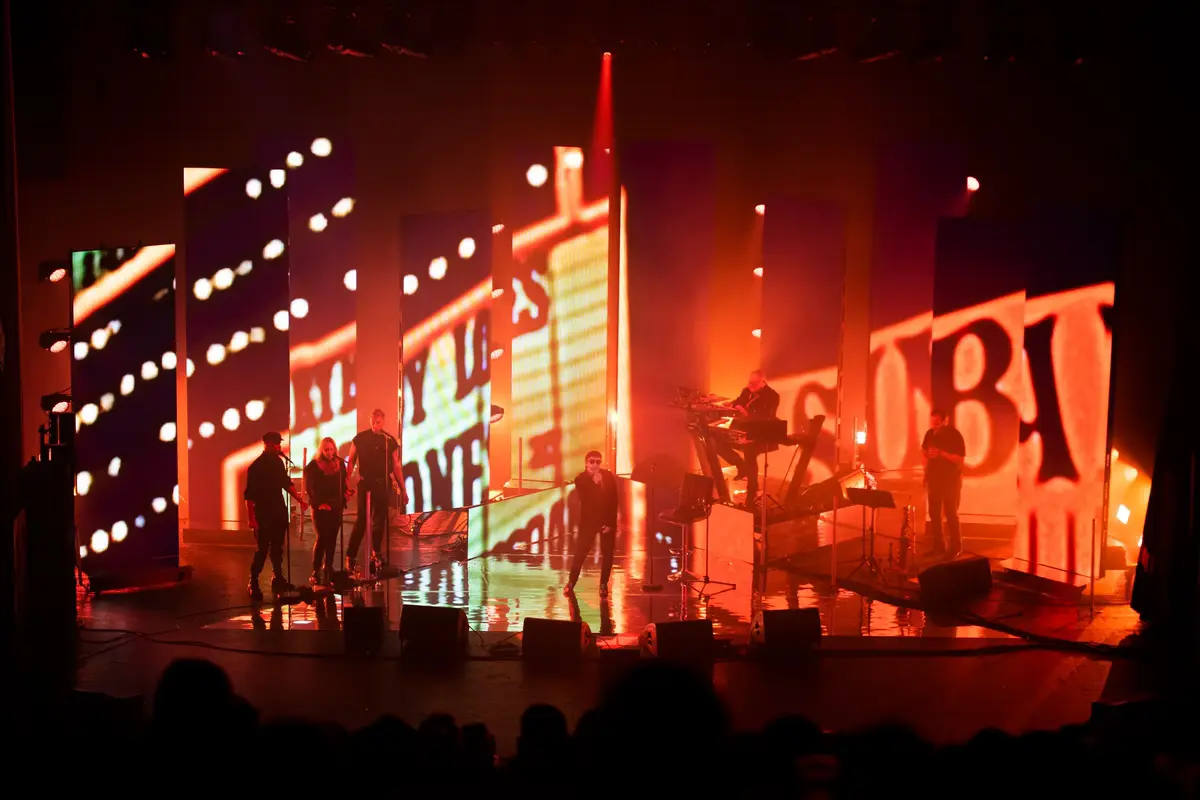
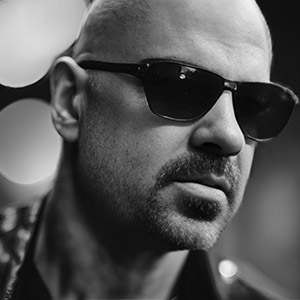
Three minutes of synth-pop changed Marc Almond's life completely. His words, not ours. And on July 2, when Soft Cell closes out the Generations Tour at OLG Stage at Fallsview Casino and Resort in Niagara Falls, Ont., sharing a bill with The Human League and Alison Moyet, those three minutes will do what they've done for 40-odd years — drag a sold-out room to its feet whether it knows the B-sides or not. This is a farewell tour in everything but name, dedicated to the late Dave Ball, and Almond is in no mood to pretend otherwise.
The bill alone is worth the price of admission. The Human League, Soft Cell and Alison Moyet didn't share a scene so much as they each built their own corner of the same room, independently and around the same moment. Sheffield electronics, seedy Soho sleaze-pop, and Moyet's enormous voice coming out of Basildon via Yazoo — three different blueprints for British synth music, one stage. The Human League is making its first proper coast-to-coast U.S. run since 2011. Moyet, who has quietly become one of the most underrated vocalists of her generation, brings a BRIT Award catalogue most acts would kill for. And Soft Cell arrive carrying grief, a posthumous record and 43 weeks of Billboard Hot 100 history.
Almond, reached by email ahead of the Niagara date, writes the way he talks onstage — direct, unvarnished, occasionally disarming. Ask him what it feels like sharing a backstage with Philip Oakey and Moyet every night and he doesn't reach for the obvious quote. "It feels like a great tour from behind the scenes - everyone is incredibly sweet and considerate, and we all get along great." No politics. No ego sniping. Three legacy acts who apparently figured out, at this point in their careers, that being professional is its own kind of radical.
The Human League's 15-year absence from a full North American tour is the kind of gap that reshuffles an audience. Almond knows it. He's quick to point out that tours like this one don't always get the luxury of a crowd that's equally invested across the whole bill. "Not all audiences are the same," he writes. "Sometimes on these types of tours audiences only come for one of the acts and you have to work harder if it is not you - but on this tour the audience are aware of and fans of all three acts." That's a sharper observation than it reads. Most package tours are exercises in tolerance. This one, by his account, isn't.
Dave Ball's name sits at the centre of everything the Generations Tour is and isn't. Ball — the other half of Soft Cell, the architect of those queasy, low-frequency synth beds that made tracks like "Sex Dwarf" genuinely uncomfortable on a good sound system — had been absent from Soft Cell's live performances for close to a decade before his death, his health declining to the point where Phil Larsen (British composer/producer) quietly stepped into the role of third member onstage. Almond doesn't dress that up. "Phil always stood in for him and was the third member of Soft Cell," he writes, and the matter-of-factness of it lands harder than sentiment would have. Larsen keeping Ball's place warm, night after night, for years. That's a story most music press never told properly.
Danceteria — finished just two days before Ball died, due in September — gets a handful of live moments on this run. Almond contextualises the material for audiences who haven't heard it yet, which is the right call. Dropping posthumous album cuts into a greatest-hits set without explanation is a quick way to lose a room. But there's a harder question buried in that choice: does an album completed under those circumstances carry weight as a proper final statement, or does it risk feeling like an artefact? Based on what Almond says about Ball's intentions — "he put everything in place to continue performing Soft Cell without him and keep the music alive" — Ball himself made that call deliberately. Danceteria is a document, not a footnote.
It is the final album because Dave died and I can't do it without him. I am not uncomfortable with closure as that is life, and we can't do anything about it. And he put everything in place to continue performing Soft Cell without him and keep the music alive.
Setlist construction on a bill like this is a genuine craft problem. Limited time per act, three wildly different fan bases with three different relationships to the catalogue, and the added pressure of premiere material from a record nobody's heard yet. Almond doesn't oversell his solution. "Each of us has a limited time so I suppose I do a couple of songs for each of the above," he writes. "In the end you can never satisfy everyone I suppose, but you try. It is always a compromise." It's a refreshingly honest answer from a performer who could easily have spun it into a story about curation and intention. He doesn't bother.
The rooms on this run are worth naming. Hollywood Bowl. Radio City Music Hall. The Grand Ole Opry. Venues that accumulate mythology just by existing. Almond has never played any of them, and his response to that fact is one of the better moments in the interview. "Not particularly. I have never played at any of the above venues so wow, what an opportunity to tick them off." Tick them off. Not claim them, not honour them. Tick them off. That's not indifference — it's the particular freedom of a man who stopped performing for approval a long time ago.
On the question of a cross-bill collaboration — the obvious fantasy pitch of pulling Oakey or Moyet onstage for something spontaneous — Almond shuts it down without hesitation. "It wouldn't look like anything because it would never happen." Eleven words. No hedge. Which, paradoxically, makes the actual show a more interesting proposition. These three acts aren't here to merge into something new. They're here as themselves, fully formed and entirely separate.
What Almond does find worth noting is who's filling those seats. Not the obvious answer — the lifers who bought Non-Stop Erotic Cabaret in 1981 and still own the 12-inch — but the younger end of the room. "There are of course my generation of fans but also a complete mixture, especially teenagers who have discovered our music through social media platforms," he writes. A track built on a Roland MC-4 sequencer and a then-scandalous lyric about a seedy downtown scene, pulling Gen Z through a Spotify algorithm or a TikTok snippet 40 years after it charted. That's not the industry working as planned. That's a song with its own survival instinct.
"Tainted Love" spent 43 consecutive weeks on the Billboard Hot 100 — a Guinness World Record at the time. It peaked at number eight. Three weeks in the top 10, which feels almost absurdly modest for a track that became culturally inescapable. Almond's relationship with it has moved well past the complicated phase that most artists land in when a single song defines public perception of their entire career. "I now respect it and thank it - it is three minutes that changed my life totally," he writes. "The relationship I have with that song is symbiotic - I also gave it a life that it might never have had." That second sentence is the one worth sitting with. The song covered by Marilyn Manson, sampled by Rihanna, streamed a billion times — it needed Almond as much as he needed it. That's not ego. That's accurate.
Soft Cell's career-long position — too sexually confrontational for daytime radio, too hook-driven for the post-punk crowd that should have claimed them — produced a cult following that outlasted the mainstream acts that outsold them. Almond doesn't mourn it. "We didn't care," he writes. "I never sold too much of my soul along the way." The implication being that some acts did, and he watched it happen, and he made a different choice. That choice produced Non-Stop Erotic Cabaret, The Art of Falling Apart, and a solo catalogue that spent 40 years refusing to repeat itself.
Which is why his answer on the solo-versus-Soft Cell question is so clean. That vast solo body of work — torch songs, electronic cabaret, art-song detours that had nothing to do with what made him famous — gets locked away entirely when he steps into a Soft Cell show. "Nothing. It is Soft Cell only. I put on the Soft Cell look and become that." There's a precision to that commitment that most legacy performers don't maintain. The temptation to blur the lines, to let the solo material bleed in and reframe the headline act as something broader, is one Almond has apparently never entertained.
And Danceteria being the final Soft Cell album — final in the actual sense, not the promotional sense — doesn't produce the existential crisis that word usually triggers in a press cycle. "It is the final album because Dave died and I can't do it without him," he writes. "I am not uncomfortable with closure as that is life, and we can't do anything about it." The Niagara date closes a 21-date run, ends the North American chapter of a farewell that started with Ball's death and ends above the falls, in a casino resort showroom on the Canadian side of the border. Almond, asked if the geography of the last night means anything, gives the only honest answer available. "It closes in Canada because that was just the logistic of the routing." But the crowd at OLG Stage on July 2 doesn't need the night to mean something to Almond. It already means something to them.