
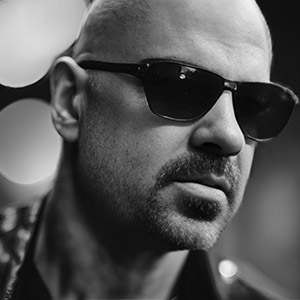
Listening back to this raw 2012 tape with G Tom Mac, you hear the unmistakable grit of a survivor. It’s a sound forged not in arenas but in the trenches of the music business, a place where you can write an anthem for a generation and still have to fight for your own name. At the time of this conversation, he was pushing a new record, Untamable, a title that felt less like an album name and more like a career summary. He was in Los Angeles, I was in a typically wet Vancouver, but the real distance was the years of industry battles that separated a working musician from the mythology of his own creation.
His goal for Untamable was telling. It wasn’t about chasing a hit but about creating a cohesive artistic thread. And that’s the central tension of Gerard McMahon, or G Tom Mac as he was known by then. He’s a songwriter’s songwriter, a craftsman who understands form and function, yet he’s defined by a singular moment of gothic, cinematic perfection. To get to that cohesive thread for the album, he had to write a mountain of material. “I wrote 30-some-odd songs and we recorded probably 20, I don’t know, 22, 23 songs just to sort of get the basic idea of it being one whole album you could listen to,” he says.
This process reveals an artist acutely aware of his own diversity, which he calls a “chameleon factor.” But let’s be direct. That factor is both a blessing and a curse. It got him into rooms with KISS and Roger Daltrey but it also diluted his own brand, making it difficult to pin down the G Tom Mac sound outside of one specific, vampiric context. The album was an attempt to corral that sprawling talent into a single, focused statement. He admits his own discomfort with listening back to his work, a classic artist’s trait. “I can’t stand to listen to it after it’s done,” he confesses, “but I’m forced to now.”
The conversation inevitably, and rightly, turns to The Lost Boys. It’s the 800-pound gorilla in the room, the song that paid the bills and defined a subculture. “Cry Little Sister” wasn’t just a song in a movie; for many, it was the movie. Hearing him recount its origin story is a lesson in creative instinct and trusting the artist. Director Joel Schumacher, a fan of Mac’s earlier work, specifically sought him out, bypassing the usual industry channels. He didn’t even have footage to show.
Schumacher sent him the script. That’s it. And somehow, Mac tapped into the film’s soul from the text alone, merging the script’s dark fantasy with the very real, crack-filled decay of his New York City life at the time. The result was a track that felt less like a score and more like a field recording from Santa Carla itself. It was a perfect marriage of sound and screen, a feat confirmed when Schumacher called him from the set. “He actually said to me, ‘I’ve been playing it along with the dailies that we’ve been shooting.’ He says, ‘It’s unbelievable. I can’t believe that you’ve not even seen what I’ve shot and you’ve come up with this piece of music.’”
But the studio and the record label, Atlantic Records, almost killed it. They didn’t hear a hit. They didn’t understand the raw, brooding energy. They wanted a name. A big one. “The record company, Atlantic Records at the time… they wanted to get Phil Collins to sing it or, you know, I think they had Steve Perry or just a slew of like the flavours of the time,” Mac recalls. It’s a stunning piece of revisionist history. Imagine that track, with its haunting children’s choir and menacing synth ostinato, sung by the guy from Journey. It’s laughable.
It was Schumacher and producer Richard Donner who fought for him. They had his back. They understood that Mac’s voice, with its unique blend of rock swagger and melancholic ache, was inseparable from the song’s power. “They just kept going, ‘No, it’s just this doesn’t feel right. We need to have this guy sing it because he’s got the feel, his voice is the film,’” he says. They won, and in doing so, they preserved a piece of cinematic and musical history. The song became a stealth hit, a cult artifact that grew its legend through VHS tapes and late-night cable broadcasts.
He actually said to me, 'I've been playing it along with the dailies that we've been shooting.' He says, 'It's unbelievable. I can't believe that you've not even seen what I've shot and you've come up with this piece of music.'
The song's organic growth is perhaps the most fascinating part of its legacy. It wasn’t a chart-topper shoved down radio’s throat. It was a slow burn, a secret handshake among fans. The pre-internet fan mail he received at Atlantic was staggering, proof of a connection that metrics and sales figures could never capture. “When I went out and got the bags of mail from Atlantic Records… it was just unbelievable how many fans were just going, ‘This song saved my life. This song got me through my last year of being living with my parents. My sister died to this song in my arms,’” Mac shares. This is the stuff that transcends commerce. It’s the moment art becomes a lifeline.
This is where we find the sole, grounding critique of an otherwise stellar career. Because of the industry’s initial blindness and the song's unconventional path to iconic status, Mac became almost synonymous with it, making it harder for his other work to get the same oxygen. The man is far more than one song, but that one song is a cultural monolith. It even got misattributed to Sisters of Mercy during the Napster era, a testament to how perfectly it defined a genre he was never fully a part of.
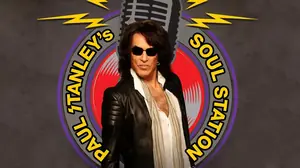
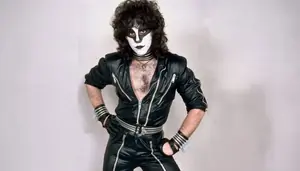
And his career is full of these incredible, almost unbelievable side-quests. Long before the goths claimed him, he was writing for the Kabuki-clad gods of thunder, KISS. He tells the story of being a young, broke musician in Los Angeles, sleeping on floors when a song he’d written, “Is That You?”, found its way to Gene Simmons and Paul Stanley. The track wasn’t right for his own record, a bit too straightforward for his more left-of-centre tastes.
But for KISS, it was perfect. It landed on their 1980 album Unmasked, a record that was already a controversial pivot towards a more pop-rock sound. Mac’s contribution fit seamlessly into that new direction. The memory of hearing their feedback is pure rock and roll lore. “I’m hearing over my answering machine… Paul and Gene, ‘This fucking rocks, man. I hope you like what we’ve done to your song,’” he laughs. It’s a brilliant anecdote that underscores his versatility.
He’s a hired gun with an artist’s soul. He talks about writing for film as a different discipline, one where the script provides the initial spark. It’s an easier form, he suggests, because the inspiration is baked in. Writing for himself is the real challenge, the true struggle to find the source of what you want to say. This duality defines his output. He can deliver a stomping rock anthem for KISS or a poignant ballad for Roger Daltrey with equal conviction.
His experience with The Who’s legendary frontman stands out as a particularly meaningful collaboration. It wasn’t just about Daltrey recording his songs; it was about Mac, as a producer, pushing a rock icon into new creative territory. He got Daltrey to write lyrics, coaching him through a period of deep insecurity about his own voice and place in music. “I learned a lot from working with Roger as much as he, you know, got a lot out of making that record with me,” he says. “So I’d have to chalk that up as one of my best experiences.”
The interview concludes with the saga of his name. From Gerard McMahon to Gerard McMann to G Tom Mac. It’s a story of practicality and reinvention. The constant mispronunciation of his Irish surname on the road became a branding nightmare. “People go, ‘Gerald McMahon,’ and I’m going like, that’s not… they would never really know the pronunciation of my name,” he explains. The final change to G Tom Mac was a definitive move to reclaim his identity in the 21st century, making it easier for sync licensing and for a new generation to find the man behind “Cry Little Sister.”
Looking back, this conversation from 2012 captures a musician in perpetual motion, an artist who has navigated the treacherous currents of the industry with his integrity intact. He may be the eternal underdog, as he puts it, but his influence is undeniable. He wrote a song that became the unofficial anthem for every kid who felt like an outsider, a track that continues to echo through pop culture decades later. And for a chameleon, that’s one colour that will never fade.
519 Magazine Archive: We are thrilled to officially unearth the Rockstar Weekly Digital Vault. This isn't just a re-post; it's a high-fidelity restoration of a pivotal era in music journalism. By pairing original print dates with modern retrospectives, we’re bridging the gap between historical rock-and-roll grit and the lightning-fast performance of today’s web. These stories—once locked in physical print and lost URLs—are now back, fully searchable, and optimized for a new generation of fans.
We are thrilled to officially unearth the 519 Magazine Digital Vault. This isn't just a re-post; it's a high-fidelity restoration of a pivotal era in music journalism. By pairing original print dates with modern retrospectives, we're bridging the gap between historical rock-and-roll grit and the lightning-fast performance of today's web. These stories—once locked in physical print and lost URLs—are now back, fully searchable, and optimized for a new generation of fans.