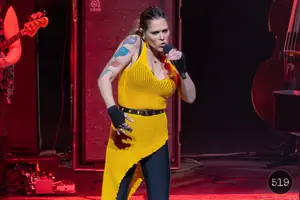
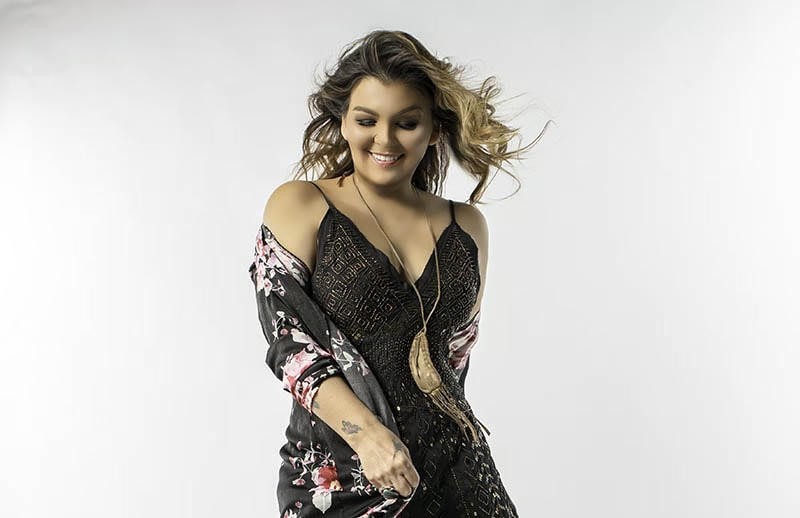
Nashville is a city built on the predictable safety of the three-chord hook and the polished sheen of Top 40 country, but Crystal Shawanda decided to set fire to that playbook. Sitting across a Zoom screen, the Ojibwe Potawatomi powerhouse looks every bit the veteran who has survived the industry’s meat grinder and come out the other side with her soul intact. She made the pivot from country to blues not because it was profitable—it certainly wasn’t—but because it was necessary.
The move was a gamble that would make most label executives break out in a cold sweat. Yet, the risk has solidified her status as a premier blues vocalist in North America. As the Juno Awards approach on June 6, Shawanda finds herself back in the familiar glow of the spotlight with a fresh crop of nominations. It is a validation of a career that began in the Wiikwemkoong First Nation on Manitoulin Island and eventually found its grit in the humid air of Tennessee.
Despite the Nashville zip code, Shawanda’s latest effort, *Church House Blues*, proves she hasn't drifted far from her Ontario roots. The record is a raw, unvarnished look at a woman who refused to be caged by genre expectations. When I ask her about the recurring nature of the Juno buzz, she doesn't offer the standard, bored industry response.
"Yeah, but it’s still really, really exciting for me and it never gets old. I never get blasé about it. I’m always very excited to still be hanging in there. I’m just grateful that people keep letting me hang around and keep singing. It’s the coolest job in the world. I’m very grateful to be nominated once again, especially to be nominated twice, so it’s very exciting," Shawanda says.
There is a genuine humility there that feels rare in a business that rewards ego. She has been in these rooms before, winning in 2013, but her memories of the ceremony are less about the hardware and more about the communal energy of Canadian music. She recalls the visceral impact of seeing her peers and idols in the same space.
"Oh, my God, there are so many but I’ll try to narrow it down. When I performed on the main stage for the televised broadcast and when I was nominated for Best New Artist and Country Recording of the Year. I performed on the stage and we did a medley, so it was Divine Brown, and then they switched over to me and then it switched over to Serena Ryder. That was really cool to be sharing the stage with some awesome Canadian women artists that I really admire and respect," she explains.
The way she describes these moments feels like a fan who accidentally ended up backstage. She talks about k.d. lang’s induction into the Canadian Music Hall of Fame with the kind of reverence usually reserved for religious experiences. It wasn't just a ceremony; it was an emotional reckoning.
"Being in the audience, one really cool moment that I had was when k.d. lang was inducted into the Canadian Music Hall of Fame - being in the audience, just being in the same room as her, I totally cried like a baby because I just think she’s the most amazing vocalist," she admits.
But the industry isn't always about the bright lights of the televised broadcast. Sometimes the most profound shifts happen in the quiet, empty spaces of a rehearsal hall. Shawanda remembers a private moment with Sarah McLachlan that sounds like a scene out of a film, where the barrier between artist and spectator evaporated.
"One private moment for me was when they were doing the rehearsals for the Juno Awards and Sarah McLachlan was on stage rehearsing her performance. I was walking around where the audience would be sitting in the seats because I was in between interviews and I was standing there all by myself. So basically, it was like Sarah McLachlan was putting on a concert just for me. I am a huge fan and she really inspired me as a woman in music, being a Canadian woman in music, and as a songwriter. She’s a brilliant songwriter and vocalist. I think those are my top three favorite moments," Shawanda says.
Transitioning between categories is a feat few artists manage without losing their identity. Shawanda has been nominated as an Aboriginal artist, a country artist, a new artist and now a blues artist. It is a testament to her versatility, but the shift to blues wasn't a smooth ride. She faced the kind of gatekeeping that plagues niche genres.
"I’m so thankful, I’m so excited. Especially with this nomination, we worked hard for this and earned this Blues nomination. Because, when I made the switch from Country to Blues, I met a little bit of resistance and rejection. Some people in the Blues world were like, 'Well, you can’t be a Blues singer, you’re a country music singer', and then some of my Country music fans were like, 'Well, I’m not gonna listen to you anymore, now that you’re singing Blues,'" she reveals.
The rejection from the country crowd was particularly pointed. In an era of social media accessibility, fans felt empowered to tell her exactly why they were jumping ship. It was a test of resolve that most artists would have failed by retreating to the safety of the status quo.
"I was like, Okay, thanks for telling me. You could have just not listened to me, you didn’t have to send me a message and tell me that. Sometimes it was tempting to not make the switch, because the easiest thing in the world would be to keep singing Country Music because I was established there, but, at the end of the day, I’m just like everybody else. I’m trying to figure out where I fit in, where I belong, where I make sense, and I’m just following my heart," she says.
The metaphor she uses for her new direction is striking. It’s not about a career move; it’s about a fundamental release of pressure.
"For me, when I’m singing the Blues, it’s like letting a bird out of a cage, and I just can’t stick her in the cage anymore. So when we were nominated for this award, I literally jumped into my husband’s arms, it was so exciting. It’s just amazing," she says.
Let’s be blunt: Country music is where the money is. It’s a machine designed to generate revenue through relatable, often sanitized narratives. The blues is the harder road, both financially and emotionally. But Shawanda wasn't looking for a paycheck; she was looking for a mirror.
"It was the honesty, the rawness. I’m very passionate about wanting to do music with a message. Music, that means something. I’m not putting down Country Music at all, but everything is very pop right now, and that’s when I decided to leave. When things started to go really pop and it seems like the only way you can get ahead is if you sing about sitting on a tailgate and drinking some beers around a fire. That’s cool, I love to do those things too, but sometimes I want to sing along to something else besides that," she notes.
There is a definitive fatigue in her voice when she talks about the "tailgate and beer" tropes of modern country. For her, music has a higher purpose than just providing a soundtrack for a Saturday night. It’s a tool for survival.
"I feel that’s my role in life as a creator, as a musician, as a human being. I feel like that’s why I was put on this earth. I’m supposed to do music that heals, and that’s always been my thing. I feel like Blues music heals. People who don’t listen to Blues are like, oh, Blues is Wha, Wha, Sad, Sad, but it’s not. Blues is about letting your frustrations out, facing your sadness straight on and then celebrating it and getting it out of your system," Shawanda explains.
The physical toll of a blues performance is part of the therapy. It’s a full-body exorcism. You don't just hear the blues; you sweat them out.
"When we’re singing so hard that you’re sweating, and you’re stomping your feet so hard and after you’re done dancing around and singing along and then it’s out of you. Those Blues aren’t inside you anymore. And when you sing about it and when I go and perform it on stage, or when I release an album, and people sing along to it, I’m hoping that my music helps people get their Blues out of their system - get it out of their hearts, get it out of their minds. That’s what I love about the Blues, because that’s what Blues Music did for me when I sing along to my favorite Blues records. I feel like I’m not alone and I feel like if they can make it through their hard times," she says.
Looking back at her country catalogue, Shawanda is honest about the compromise. While she stands by hits like "You Can Let Go," she acknowledges the pull of Top 40 radio and the pressure to deliver a specific sound.
"I think some of it was really authentic. Some of it was also aimed towards trying to get on Top 40 radio. I am very proud of my big hit record with my big hit single 'You Can Let Go' because although it was a little bit contrived, in the sense that it was still derived from a real moment. The songwriters who wrote that song were writing about something that they went through and connected to. When I heard that song at that time, my grandfather was sick in the hospital and we knew that he would be leaving soon. When I heard that song, it reminded me of him," she recalls.
The song resonated because it tapped into a universal experience of grief, something Shawanda had witnessed firsthand as a child. It was the kind of traditional storytelling that used to define the genre before the pop crossover era took hold.
"I watched my mom go through that moment with her mom, I remember being nine years old and watching my mom say that to her mom – 'you can go now, I’m going to be okay, we’re going to be okay. I’m going to take care of everyone'. That’s why it went so high in the charts, into the top 20, because it really was the kind country music that I grew up on. I grew up on old country music - the traditional country music like Hank Williams and Loretta Lynn, Patsy Cline, and Patty Loveless. I feel like my song 'You Can Let Go' stayed in the same lane as those songs that I grew up on. There are a couple songs on my first debut Country Album where I feel like I was almost forced to do them," she admits.
Sometimes it was tempting to not make the switch, because the easiest thing in the world would be to keep singing Country Music because I was established there, but, at the end of the day, I’m just like everybody else. I’m trying to figure out where I fit in, where I belong, where I make sense, and I’m just following my heart. For me, when I’m singing the Blues, it’s like letting a bird out of a cage, and I just can’t stick her in the cage anymore.
The industry pressure was real. The tension between artistic integrity and commercial viability is a story as old as the hills of Tennessee.
"I did love them though, but I felt like there were other songs that we could have recorded, but I had to do those ones because that’s what everybody felt was going to be a hit on radio," she says.
With *Church House Blues*, those shackles are gone. The connection to the material is total. Every lyric is a piece of her history or the history of those in her orbit. The title track itself is a biography of her upbringing, split between the sacred and the profane.
"Definitely, there was so much connection. Every single song is something I’ve been through or somebody that I really care about has been through. I’m a storyteller and sometimes it’s not my story. Sometimes it’s the people around me, for example, the title track 'Church House Blues'. I really connected to that, in every sense, because of the way I grew up. I would say that I have received training musically and socially from two different worlds. Growing up on an Indian reservation, I grew up like a lot of other reservations in the same atmosphere. At a young age being exposed to things like alcoholism, addiction, depression, and high risk lifestyles, so I was really understanding of people’s personal traumas and that everybody has their own thing that they’re dealing with," she says.
Her childhood was an education in the human condition. While other kids were playing games, Shawanda was witnessing the heavy realities of life and death, providing the soundtrack for her community’s most somber moments.
"I started singing so young and my parents were always trying to look for places for me to sing. My mom would take me to church to sing. I sang a lot with the choir, but I also performed a lot by myself. I would sing at weddings and I sang a lot at funerals. So, I was very familiar with death at a very young age. By 10 years old, I had been around it so much," she notes.
But the weekends offered a different kind of sanctuary. Her father would usher her into local taverns, where she would swap gospel for the grit of Johnny Cash. It was here she learned the art of the performance, winning over crowds that expected a child to sing nursery rhymes.
"Then on the weekends, my mom and dad would hear about a band playing at a local tavern or a bar and grill somewhere, they would always go in disguised like they were just coming in to eat. Then while we were there, my dad would ask me if I wanted to sing. I said Yeah yeah, and he’d go ask the band. So they’d be like, oh, what do you want to sing? 'Puff the Magic Dragon'? and I’d be like, no, let’s do some Johnny Cash - Folsom Prison Blues. Then I would get up and sing," she says.
That dual education—the church and the roadhouse—is the foundation of her current sound. It’s a recognition that the two worlds aren't as far apart as people think.
"After a while a lot of these bands got to know me, so when they would see us walk in, I didn’t have to ask anymore, they would just invite me up to sing. I got a lot of training from a lot of local bands and people who were passing through. I feel like I got training from both the Church House and the Roadhouse, and that’s what that song is about. It’s about playing at a Roadhouse on a Saturday night and then going to church on a Sunday morning and realizing that, instead of focusing on the differences, it focuses on the similarities. We’re all more the same than different and that’s what I’ve seen, being in both worlds - hanging out in churches and hanging out and bars at a young age. We’re all more the same than different. We’re just trying to find something that gets us through life and whatever you find as long as you can keep it in a healthy place, then all the power to you," she says.
The blues wasn't just something she found later in life; it was the soundtrack to her brother’s basement labour. While her parents spun country records, her oldest brother was deep in the mud of the Delta sound.
"My parent’s listened to older country music and then my oldest brother listened to Blues - straight up Blues like Muddy Waters. Etta James, B.B. King, Elmore James and Howlin’ Wolf. My brother liked to go hunting, so he’d be in the basement messing around making bullets and cranking up the Blues and he’d be singing along. I could tell because my brothers aren’t singers, but they always sing along with whatever is playing. And in Blues, particularly, I would notice that Muddy Waters would really get him going. When Muddy would rock back and kind of let out a moan, that’s my brother. He’d be working and then all sudden, he just lifts his head and he’d let out the same moan, and I could see that my brother connected to that music for his own reasons," she remembers.
This connection between Indigenous communities and the blues is something Shawanda sees as a natural fit. The shared history of oppression and struggle makes the genre a perfect vessel for First Nations stories.
"Also, playing in a lot of different variety shows all over Ontario, I would see a lot of indigenous musicians and artists and bands, who were playing Blues music. When I was a kid, I used to wonder why, and as I started to grow up, I started to realize why, because we connect with it, because we’ve been there, we relate to it," she explains.
When asked about the emergence of a specific "First Nations Blues," Shawanda points to artists like Derek Miller and Murray Porter as pioneers. She sees her own work, particularly songs like "Pray Sister Pray," as a necessary expansion of what the blues can be.
"Yeah, I think it’s already out there. A great example is Derek Miller, he’s an amazing Blues musician. 'Music is a Medicine' - that album was killer, and I’ve heard a few people refer to it as a rock album. But I don’t know, there’s some really great Blues music on there too. Murray Porter has been around for a long time. I grew up on Murray Porter. My very first Blues album that I put out was 'The Whole World’s Got the Blues' and on that album, I had a song called 'Pray Sister Pray' which is actually really about raising awareness about missing and murdered Indigenous women. When I put that song on the album, some people said it’s not a blue song, that’s it’s an Indigenous song," she says.
Shawanda is careful not to co-opt the specific history of the African American experience in the South, but she asserts her right to use the blues to tell her own people’s truths.
"I don’t have the right to try to tell somebody else’s Blues story - somebody who grew up in the south, like a black person who grew up in the south and the oppression and the obstacles and struggles that they grew up with, that’s not my story to tell. I’m trying to tell our stories and that’s why I felt like 'Pray Sister Pray' absolutely belonged on a Blues album, because that is our Blues. That’s what we’re dealing with. I think those are some really good examples," she says.
The themes of mental health and suicide are also present in her work, specifically on the track "Bigger than the Blues." Inspired by the tragic loss of Inuk artist Kelly Fraser, Shawanda uses her platform to address the crisis within Indigenous communities.
"I try to pick and choose and what stories I’m telling and when I’m telling them. Obviously they have to fit with the other songs on the album. I feel like they do, for instance on this most recent album, 'Church House Blues', there was a song on it called 'Bigger than the Blues' and that song was actually inspired by some honest conversations about depression, mental health and suicide. Unfortunately, after the suicide of Kelly Fraser who is very talented Inuk pop artist who took her life last Christmas, I think our battles with depression and suicide still happen a lot within our Indigenous communities," she shares.
The song is a lifeline, born out of her own experiences with loss and the desire to provide a sense of hope to those struggling in silence.
"I grew up with it a lot, a lot of cousins, and childhood friends who didn’t make it into adulthood. That was something I told my husband, I want to write about this - everything we’re talking about - I want to put it into a song in the hopes that when somebody’s struggling, they’ll hear the song and it’ll help them deal with it, go to bed and wake up in the morning with a fresh mind and realize that it’s going to be okay, and that they’re bigger than their Blues," she says.
Living in Nashville for nearly two decades hasn't diminished her Canadian identity. She is a frequent traveler to the North, often dragging her husband on long hauls just to touch the soil of Manitoulin Island.
"I’ve been in Nashville now for 18 years, but Canada has always been super supportive of me. I tour a lot in Canada, I do a lot of shows in the south in America, but Canada is just so good to me. I can’t stay away. I have my favorite places that I love tour and that I love to play. All my family is still in Canada. I purposely try to tour as much as I can here so that I can see my family as much as I can. If we have an average show in the West, like in B.C. or Alberta, I’ll always say to my husband, why don’t we swing by Manitoulin Island and go see my family? We’ll fly through Toronto a lot and my husband will be like, that’s like 16 hours, we’ll have to drive all the way there and back to the airport again. I’m like, yeah, that’s nothing. I’m still very connected to Canada. All my family is here and I’m very proud of my Canadian roots. I have so many idols who are Canadian artists who have inspired me to be the artist I am," she says.
The island is more than just a home; it’s a battery. When the world shut down during the pandemic, Shawanda found herself bunkered down there, rediscovering the reasons she started singing in the first place.
"Definitely for inspiration. I go to Manitoulin Island to rejuvenate my soul. When I’m there, it’s being around my family, my community and even just the land. I always tell my husband because even if my family comes to visit me in Nashville, I still want to go up there. It’s the island, the water, and the land. When I’m there, I feel inspired. I go for a lot of walks, hikes, drives, and I just do a lot of thinking. When the pandemic was declared last spring, that’s where I was - on the Island. So I kind of bunkered down there for a couple months. It was cool, because all of a sudden, I started remembering things I didn’t remember for a long time; things that made me want to be a singer that made me want to go out into the world and what I wanted to try to bring back to my community," she reflects.
The isolation of the pandemic led to a surprising shift in her songwriting. Despite her history with depression, the forced family time resulted in music that was unexpectedly positive.
"There are a couple songs in there that I don’t feel the pressure because I’m doing Blues - I don’t feel pressured to do up tempo positive things all the time. We ended up doing a couple songs that were not up tempo, but positive. It was totally unintentional. It’s just came out. Ever since I was a kid, I’ve struggled with depression, so when the pandemic was declared and my whole tour was canceled for the spring, summer and fall, I knew that there was a danger of me getting lost in my depression. My busy career is what keeps me from succumbing to my depression, so I was a little bit scared about what was going to happen to me mentally. I have a little girl now and she’s four years old and she needs so much attention. I immediately went into survival mode, and I’m like, Okay, I need to focus on keeping her happy and we got to stay happy because we got to stay positive, because I can’t get depressed," she says.
The focus on her daughter became her anchor. The songs that emerged from this period aren't the forced sunshine of a corporate pop record; they are the genuine reflections of a family unit tightening its bond.
"We work really hard every day to fill our day. We always try to do something fun, one special thing every day with our little girl as a family. We’re playing all day, but I always pick something different to do with her. As a family, we have really banded together in our little bubble - we even got a little dog. Because of all the isolation, some of the songs we were writing ended up being kind of happy, and it’s a very genuine happy. There are a couple songs that are about relationships, the person that you’re with and the people that you’re surrounded by - and they just have this really feel good vibe," Shawanda explains.
But when she looks for the definitive piece of her blues career, she points back to the song that started it all. "The Whole World’s Got the Blues" was the moment she stopped writing for the charts and started writing for herself again.
"I think definitely would be 'The Whole World’s Got the Blues', which was the title track of my very first Blues album. Just because it was so honest. One day, we were watching the news and after I was just sitting there and I was just so overwhelmed with all the headlines. I just picked up my guitar and just started writing. I wasn’t trying to write a hit song, I wasn’t trying to appeal to this person, or this group, or these people. I’ve always said songwriting is like cheap therapy, and I feel like somewhere along the line, I lost that when I was shooting for Top 20 Country radio. It stopped being therapy and it started to be a job," she admits.
That realization led to the creation of her own label, New Sun Records, giving her the freedom to ignore the genre constraints that had previously defined her.
"When I was watching the news that day and I started writing that song on the guitar, my husband came running out of the kitchen into the living room and he was like, that’s really cool. we sat down and wrote the whole song. After we were done, we’re like, what do we do with this? It’s obviously not country. And I say yes, but I love it. At that time, I was on my own record, label New Sun Records, so I said, well, let’s do a Blues album - isn’t that why we started our own record label, so we could do whatever we wanted. We could do stuff that meant something to us, so we did the Blues album and that was the beginning of my Blues career," she says.
Shawanda’s path to the blues was hidden in plain sight, even during her country days. She notes that her idol, Hank Williams, was essentially a bluesman in a cowboy hat.
"I definitely think so, looking back on my life, in the direction my music went, and why it went that way. Growing up, I think my dad was just trying to help me find places to sing. There’s nowhere to sing this kind of music or that kind of music, but there’s country music, so you should do country music. But he never forced me. Nobody ever forced me. I did love some of the country music I grew up on. My favorite country music artists was Hank Williams and he’s a Country Blues man, whether people realize it or not. The way he grew up is that everything he knew, he learned from a black Blues man in his town. Hank Williams used to shine shoes and then he would take his money and go and pay the Blues man. That’s why when you look back through his catalogue, he’s got stuff like 'Lovesick Blues', 'Long Gone Lonesome Blues', 'Moanin’ the Blues', and he even did a cover of a Blues song 'My Bucket’s Got A Hole In It'," she points out.
Even her big break in Nashville happened while she was leaning into the bluesier side of her repertoire. She was signed to RCA not for her country twang, but for the grit she brought to Janis Joplin and Muddy Waters covers.
"The honest truth is a lot of people don’t realize that when I was signed to my record deal with RCA Records, I was playing in downtown Nashville at Tootsie’s Orchid Lounge, which is one of the most world famous honky tonks, but we were playing in the backroom when I got discovered. We were playing in the background because we didn’t do country music. I was discovered when Joe Galante walked into that bar and I was playing Janis Joplin. I was playing Big Mama Thornton. I was playing Etta James and Muddy Waters and when they signed me, they were like, we don’t do Blues we do Country, do you want to do a Country Music deal? I would have been an idiot to turn that down. I took the opportunity. I never regret that because I learned from some of the best people in the business," she says.
She spent years under the tutelage of industry titans like Doc McGhee and Scott Hendricks, learning how to navigate the machinery of stardom.
"My manager at the time was Doc McGhee, who’s the biggest rock manager in the world, and Scott Hendricks is one of the biggest Country Music producers. I had the chance to work with these people. They taught me everything I know. They taught me to be an artist, and not just a singer. I feel like even though I got sidetracked in my path, I feel like it was meant to be so that I could be the artist I am today," she says.
Working with McGhee meant rubbing shoulders with rock royalty, though Shawanda kept her fan-girl enthusiasm close to the surface.
"A little bit. One time we did get to do a fundraiser golf tournament. It was a bunch of guys from KISS, and a couple of guys from Warrant and a couple of members of The Eagles. There were a lot of people there, a lot of big names, and the whole time I was just like this little kid giggling and walking around. There were some people who like me, were newer artists, and they’re really trying to push their way in there. They really wanted those rock singers to hear them sing, and for me, I was just happy to be there. I was just like, whenever it’s my turn sing great, and when it isn’t, I’m just gonna stand here and giggle like a little kid because I can’t believe I’m here," she laughs.
The rock influence eventually culminated in her decision to cover The Tragically Hip’s "New Orleans Is Sinking," a bold move for any Canadian artist, let alone one trying to establish themselves in the blues world.
"Well, for one, I’m a Canadian girl and I’ve always been a huge Tragically Hip fan. I’ve always said that their music is the soundtrack to my misspent youth (laughter). I’ve just been listening to them ever since I can remember when we were kids up to no good. That’s what we’re listening to at the parties, and at the fire pits out in the bush parties and I would booze cruise and all that kind of fun stuff. I grew up loving it, and I remember every time that song came on, I would think it would be so cool to take the song and exaggerate the Blues elements," she says.
She and her husband, Dewayne Strobel, approached the track with a desire to strip it down and find the "spooky vibe" hidden beneath the rock anthem’s surface.
"When we were working on this album, I brought the idea to my husband, Dewayne Strobel, who plays all the guitars on this album, and he’s the producer as well. I played the song and he said we should do it. We’re always trying to show people that Blues doesn’t fit in this tiny little box, it’s so much bigger than that. It’s like Willie Dixon said 'Blues is the roots and everything else is the fruits', and whether people realize it or not, Blues is in every genre of music that has come after it. You just got to look a little bit closer to see it," she explains.
The recording process for the Hip cover was lightning in a bottle. They didn't overthink it; they just played.
"When I first came to the blue scene, people were like, Oh, you don’t know nothing about the Blues, you’re a country music singer and then some people were like, why would you do a rock song, you’re already having a hard time getting accepted as it is, and I’m like, because that’s just the way I am. I don’t mind the struggle. I don’t mind a fight. For me, I just felt like it was when we went into the studio to record it. I actually didn’t even play the original version for the musicians. We just sat down - Dewayne sat down with his dobro - and I started singing it and we played it for them. Let’s just feel the spooky vibe and just go with it. So we started playing it and after that first take was over, our bass player Dave Roe says 'We ain’t playing another take, that’s the one' and so that was our one and only take in the studio on that song. It’s just magic," she says.
Shawanda is no longer interested in the polished, multi-take perfection of the Nashville machine. She’s looking for the magic, the grit and the truth. And if that means losing a few country fans along the way, she’s more than fine with the trade-off.